Japan’s Crypto Exchange Rules Are the Strictest in the World
If you’re thinking about launching a crypto exchange or investing in one in Japan, you need to understand one thing: the Financial Services Agency (FSA) doesn’t play around. Unlike other countries where crypto rules feel like suggestions, Japan treats them like laws written in stone. Operating without FSA approval isn’t just risky-it’s illegal. And the penalties aren’t fines. They’re shutdowns, criminal charges, and permanent bans.
How Japan’s Crypto Rules Got So Tough
The turning point came in 2014, after Mt. Gox collapsed and over 850,000 bitcoins vanished. The public lost trust. The government had to act. In 2017, Japan passed the Payment Services Act (PSA), making it the first major economy to legally recognize cryptocurrencies as property and require all exchanges to register with the FSA. Since then, the rules have only gotten tighter. Updates in 2020 and 2023 added stronger KYC, AML, and fund segregation rules. By 2025, Japan had 18.69 million crypto users-more than any other country in Asia-and the FSA wasn’t about to let chaos return.
The Two Laws That Control Everything
There are two legal pillars holding up Japan’s crypto system: the Payment Services Act and the Financial Instruments and Exchange Act (FIEA). The PSA covers basic exchange operations-licensing, custody, and customer protection. But starting in June 2025, the FSA began shifting the focus. Certain crypto assets, especially those with investment features like staking rewards, governance votes, or profit-sharing, are now being reclassified under the FIEA. That means they’re treated like stocks or bonds. Issuers must file disclosures. Insiders can’t trade ahead of news. Market manipulation is now a clear crime. The formal bill will pass in early 2026, making Japan the first country to fully integrate crypto into its securities framework.
What It Takes to Get Licensed
Getting an FSA license isn’t a form you fill out online. It’s a year-long project. You need to:
- Set up a Kabushiki Kaisha (a Japanese joint-stock company)
- Have a physical office in Japan-with a local address, not a PO box
- Open a Japanese bank account
- Hold at least 10 million yen in capital (about $65,000 USD)
- Appoint a compliance officer with real experience
- Pass a background check on every director and major shareholder
The FSA doesn’t just check paperwork. They send inspectors to your office. They test your cybersecurity systems. They interview your staff. They review your cold storage logs. If you’re missing one thing, your application gets rejected. No second chances.

The Cold Wallet Rule That Changed Everything
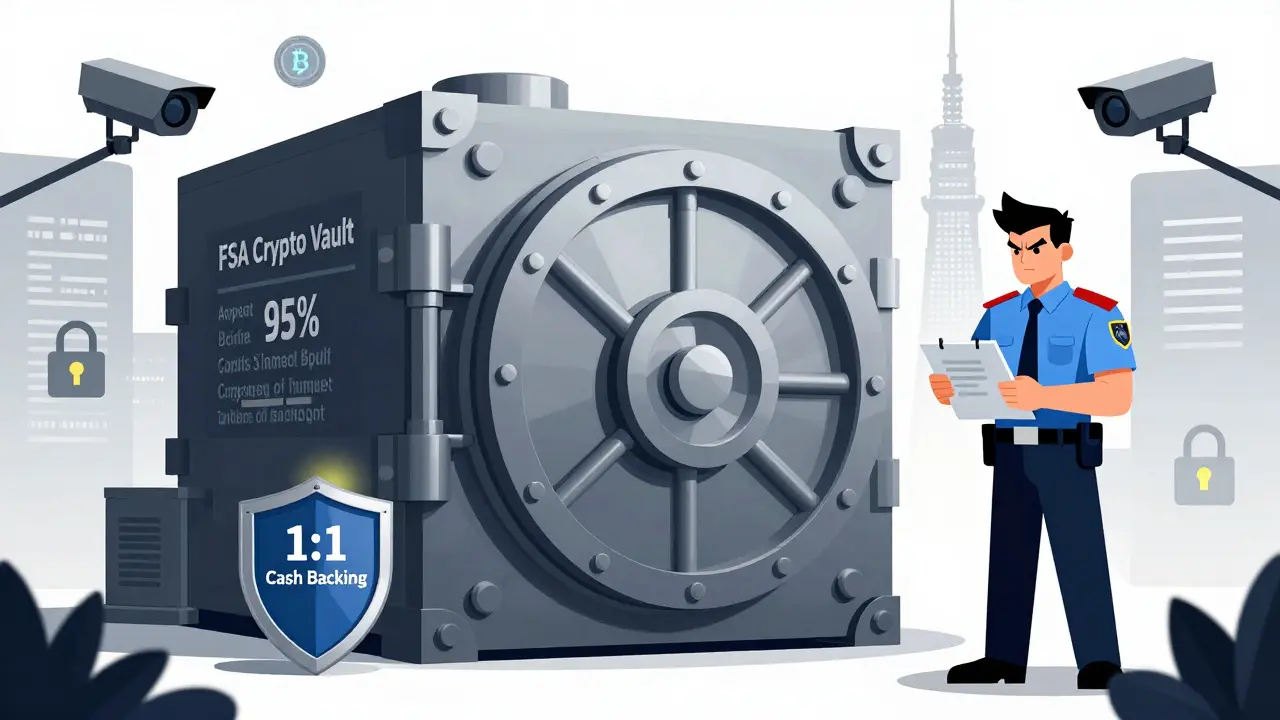
Japan’s most famous rule? 95% of customer crypto must be stored in cold wallets-offline, disconnected from the internet. That’s not a recommendation. It’s the law. If an exchange wants to keep any coins online (hot wallets), they have to back every single yen of it with their own money. So if $1 million in Bitcoin is in a hot wallet, the exchange must hold $1 million in cash or liquid assets to cover potential losses. That’s why Japanese exchanges rarely use hot wallets. The risk isn’t worth it. This rule alone has made Japan the safest place in the world to hold crypto on an exchange.
Why This Matters for Investors
Japan’s strict rules mean fewer exchanges-but the ones that survive are the most trustworthy. Binance, Kraken, and Coinbase all tried to enter Japan. Only a handful passed. Today, the top exchanges like BitFlyer, Coincheck, and Zaif are known globally for their security. Investors don’t just trust them because they’re big. They trust them because the FSA has vetted them. And that trust shows in the numbers: Japan’s crypto market is expected to hit $2 billion in revenue in 2025, with adoption growing to 15.26% of the population by next year.
The Tax Problem No One Talks About
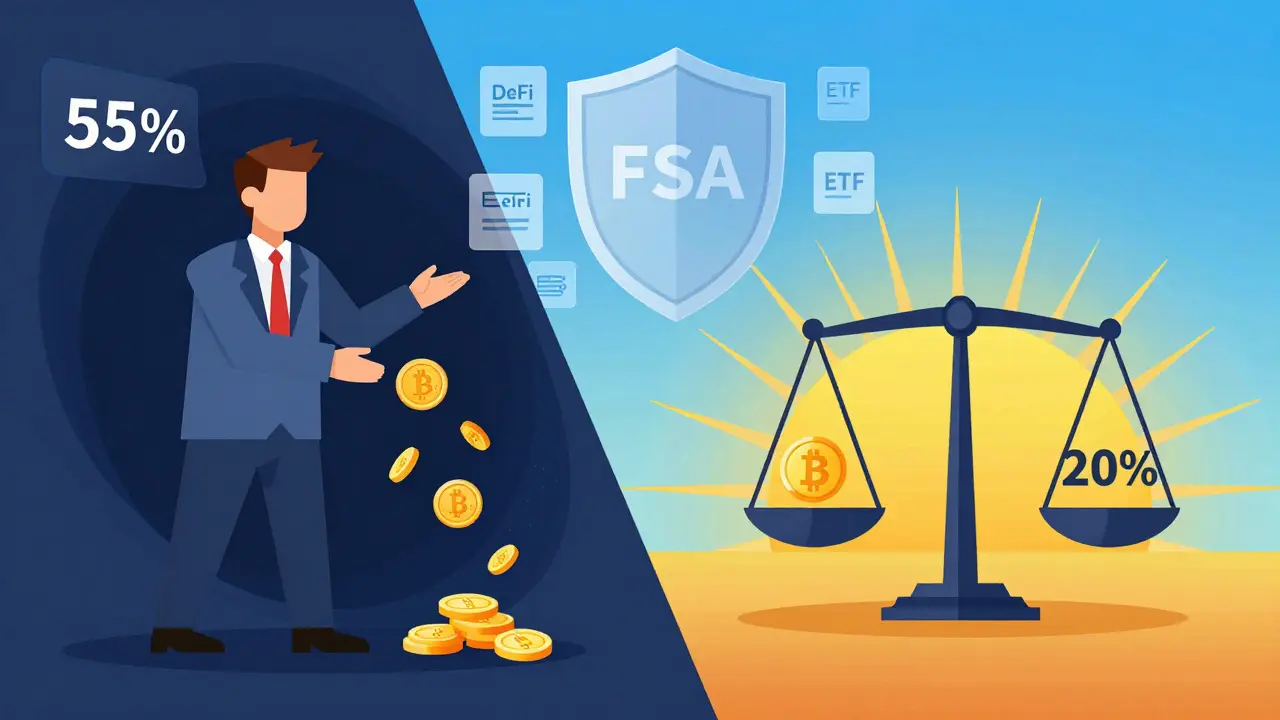
But there’s a catch. While the FSA protects your assets, the tax system doesn’t. Profits from crypto trades are taxed as “miscellaneous income”-up to 55% if you’re a high earner. That’s higher than the top rate on stocks. The FSA knows this is a problem. In late 2025, they recommended aligning crypto taxes with traditional investments, pushing for a flat 20% rate. That change could come in 2026. Until then, traders in Japan are paying nearly triple what investors pay on equities. It’s a major disincentive, and many are waiting to see if the government follows through.
What’s Coming in 2026
The next big shift is the full transition from PSA to FIEA oversight. Once it happens, crypto tokens with investment features will be regulated just like IPOs. Exchanges will need to verify who’s buying, how much they know, and whether they’re being misled. Spot Bitcoin ETFs could launch in Japan before the U.S. or Europe. The FSA’s DeFi Study Group is already meeting every two months with academics and devs to figure out how to regulate smart contracts without killing innovation. Japan isn’t trying to stop crypto. It’s trying to make it safe, transparent, and sustainable.
Why Japan’s Model Is Being Watched Globally
Other countries are watching. The EU’s MiCA rules? They borrowed from Japan’s custody rules. The UK’s new crypto guidance? It mirrors Japan’s licensing rigor. Even the U.S. SEC is quietly studying how Japan handles token classification. Japan didn’t just create rules. It created a system where exchanges can’t hide, investors can’t be fooled, and fraud is nearly impossible. The cost? High barriers to entry. Fewer startups. But the result? A market where people feel safe. And that’s what builds real, lasting value.
What This Means for You
If you’re an investor: Japan’s exchanges are the safest in the world. Use them. Your crypto is more secure here than anywhere else.
If you’re a business: Don’t try to cut corners. The FSA doesn’t negotiate. Build your company in Japan from day one. Hire local compliance experts. Invest in cold storage. Accept that this isn’t a shortcut-it’s a marathon.
If you’re a developer: Japan is the only place where DeFi and smart contracts are being studied with real regulatory intent. The FSA isn’t banning innovation. They’re asking how to protect users without breaking it. That’s the future of crypto regulation.
Kevin Karpiak
December 24, 2025 AT 10:10Megan O'Brien
December 26, 2025 AT 07:34Helen Pieracacos
December 26, 2025 AT 11:07Sybille Wernheim
December 27, 2025 AT 19:44Amit Kumar
December 28, 2025 AT 16:56Melissa Black
December 30, 2025 AT 05:27vaibhav pushilkar
December 31, 2025 AT 18:23Naman Modi
January 1, 2026 AT 15:28Lloyd Yang
January 2, 2026 AT 05:59Cathy Bounchareune
January 2, 2026 AT 07:48Dusty Rogers
January 3, 2026 AT 20:25Mmathapelo Ndlovu
January 4, 2026 AT 13:53Brian Martitsch
January 6, 2026 AT 09:09Rebecca F
January 6, 2026 AT 19:13Zavier McGuire
January 7, 2026 AT 13:06Ashley Lewis
January 8, 2026 AT 04:35