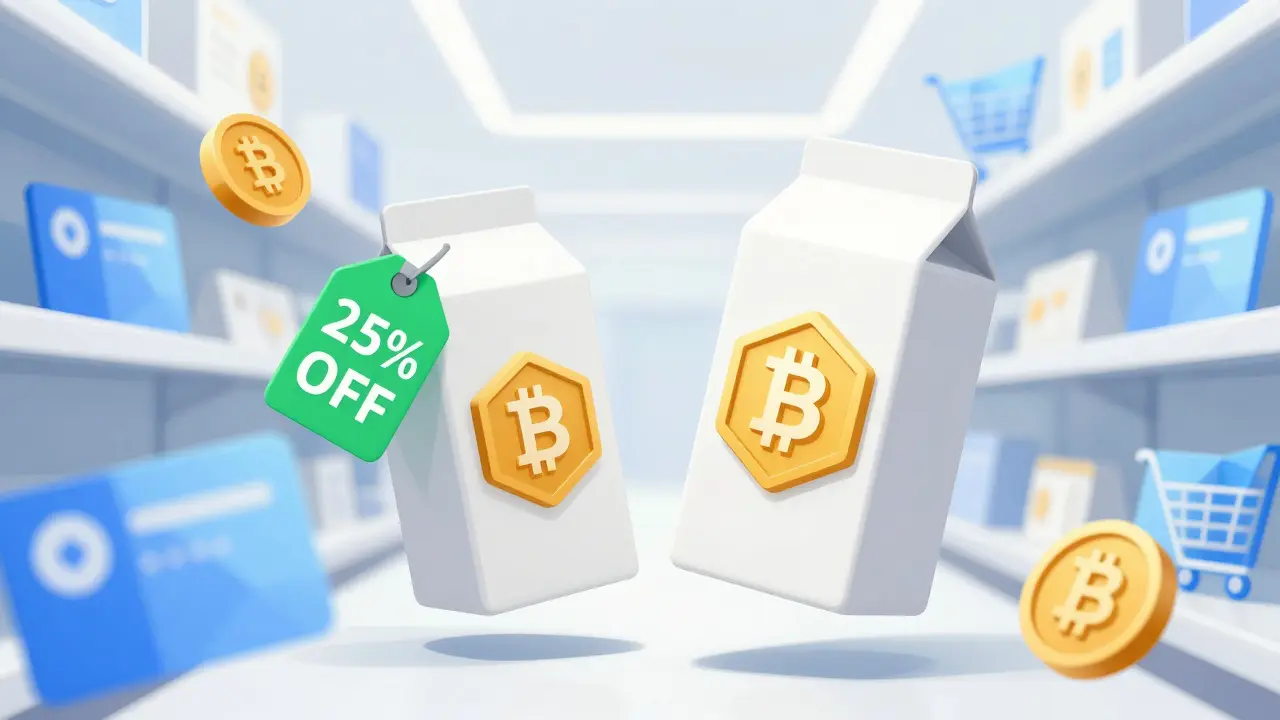
Imagine you are standing in a supermarket. You see two identical cartons of milk. One is priced at $5. The other is $3. Why? Because the cheaper one comes from a store where you have a loyalty card. In the world of cryptocurrency, Exchange Tokens are that loyalty card. They are native digital assets issued by centralized exchanges to reward users who hold them. But not all exchange tokens are created equal. Some offer massive fee discounts, while others promise governance rights or access to exclusive investment opportunities.
As we move through 2026, the landscape has shifted dramatically since Binance first introduced BNB in 2017. These tokens now represent over $120 billion in market capitalization. But which one actually adds value to your portfolio? Is it the established giant like BNB, or an aggressive newcomer like MX? Let’s break down the major players-BNB, OKB, BGB, MX, GT, and KCS-to help you decide where your capital should sit.
The Mechanics of Value: How Exchange Tokenomics Work
To understand why these tokens matter, you need to look past the price charts. The real value lies in their "tokenomics"-the economic model governing supply, demand, and utility. Most major exchange tokens rely on three core mechanisms: fee discounts, buybacks, and burns.
Fee Discounts are the immediate benefit. If you trade frequently, holding the native token can slash your costs significantly. Buybacks occur when the exchange uses its profits to purchase its own token from the open market. This creates constant buying pressure. Burns take those bought-back tokens and destroy them permanently, reducing the total supply. When supply drops and demand stays steady, price tends to rise. It’s basic economics, but executed differently by each platform.
| Token | Exchange | Fee Discount | Supply Model | Burn Mechanism |
|---|---|---|---|---|
| BNB | Binance | 25% | Decreasing (Auto-Burn) | Quarterly; aims for 50% of original supply |
| OKB | OKX | 40% | Fixed (21 Million) | Buybacks funded by 30% of profits |
| BGB | Bitget | 20% | Lock-and-Burn | 50% of revenue funds quarterly burns |
| MX | MEXC | 50% | Capped (100 Million) | 50% of revenue funds buybacks |
| GT | Gate.io | 20% | Quarterly Burn | 20% of platform revenue funds destruction |
| KCS | KuCoin | 20% | Proportional Burn | 50% of daily trading fees fund burns |
BNB: The Established Market Leader
BNB is the flagship token of Binance, the world's largest cryptocurrency exchange by volume. Launched in 2017, it set the standard for what an exchange token could be. Today, BNB holds a dominant 45.2% share of the exchange token market. Its strength isn't just in fee discounts; it's in its ecosystem. BNB powers the BNB Chain, which processes over 3.2 million transactions daily. This means you aren't just holding a discount coupon; you're holding a piece of a multi-chain infrastructure used by millions of decentralized applications (dApps).
However, BNB is not without risks. Regulatory scrutiny remains a persistent shadow. Following Binance's settlement with U.S. regulators in late 2024, some investors worry about future restrictions. Despite this, user adoption remains incredibly high. About 87.3% of Binance users hold BNB specifically for fee reductions. For beginners, the learning curve is moderate-expect to spend 3-5 hours mastering its various utilities, from paying gas fees on the chain to staking for yield. If you want stability and broad utility, BNB is still the heavyweight champion.
OKB: Scarcity Meets Ecosystem Depth
If BNB is about scale, OKB is the native utility token of OKX, focusing on scarcity and deep ecosystem integration. Unlike BNB, which has a decreasing supply, OKB has a fixed supply of 21 million tokens. This hard cap creates a different kind of value proposition. With no new tokens ever being minted, every buyback directly impacts the circulating supply. Since 2023, OKX has burned enough OKB to reduce circulation by 12.3%.
OKB offers a steep 40% discount on trading fees, which is higher than BNB's 25%. Beyond fees, OKB holders get access to OKX Earn products, which average around 8.5% APY. More importantly, OKB provides governance rights on the OKX DEX. As of early 2026, there are over 400 dApps built on the OKX Chain (OKC). Experts like Dr. Garrick Hileman from Blockchain.com argue that OKB's fixed supply model might lead to superior long-term value retention compared to burn-based models. However, the complexity of integrating with the OKC ecosystem requires more time to master-roughly 7-10 hours for proficiency.
MX: The Aggressive Challenger
MX is the native token of MEXC, known for its aggressive expansion into altcoin markets. If you are tired of waiting for new projects to list on major exchanges, MEXC is often the first stop. MX stands out with the highest fee discount in this group: 50%. That is a significant saving for active traders. MEXC lists over 2,690 spot pairs, far more than most competitors.
The tokenomics here are straightforward but potent. MEXC uses 50% of its revenue to buy back MX tokens. Since inception, they have bought back nearly $487 million worth of MX. The appeal is clear: if MEXC grows, MX benefits directly through buybacks. However, the platform has a steeper learning curve. The advanced trading interface can overwhelm beginners, requiring 8-12 hours to fully navigate. Additionally, MEXC faces questions about regulatory compliance in certain jurisdictions, which is a risk factor you must weigh against the high discounts.
BGB: The Copy-Trading Powerhouse
BGB is the native token of Bitget, an exchange that gained massive traction through its copy-trading features. Bitget dominates the social trading space, especially in Asia. BGB’s utility is tightly linked to this feature set. Holding BGB gives you better access to copy-trading functions and staking rewards up to 12% APY. The token employs a "lock-and-burn" model, where 50% of Bitget's revenue goes toward quarterly burns. By late 2025, 2.5 billion BGB tokens had already been destroyed.
BGB’s rise is impressive, capturing 7.6% of the exchange volume share. Its connection to the Morph blockchain also adds a DeFi layer to its utility. However, the user experience varies by region. While Asian users praise the interface and yields, English-speaking users sometimes report limitations in language support and documentation. If you are heavily involved in social trading or follow expert traders, BGB offers unique utility that traditional exchange tokens lack.
GT and KCS: Niche Utilities and Stability
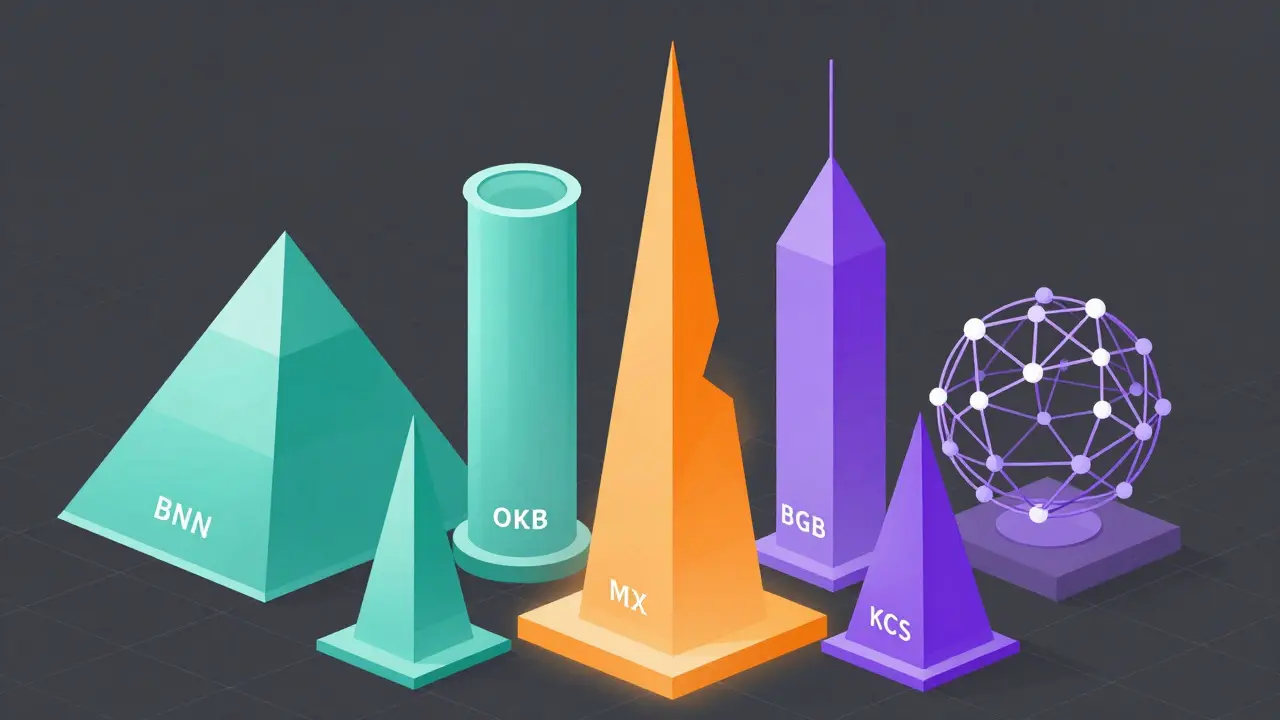
GT is the native token of Gate.io, while KCS belongs to KuCoin. Both have carved out specific niches. Gate.io has a strong presence in the Middle East, holding a VARA license in Dubai. GT offers a 20% fee discount and integrates with GateChain for cross-chain swaps. The exchange’s sponsorship of Oracle Red Bull Racing has also boosted brand visibility, though the token’s utility remains somewhat tied to the exchange's proprietary ecosystem.
KuCoin’s KCS takes a different approach. It focuses on security and innovation. KuCoin maintains a $2 billion protection fund, which reassures nervous investors. KCS holders benefit from AI-driven trading bots and Apple Pay integration via KuCard. The burn mechanism is proportional to daily trading fees, ensuring that busier days mean more burns. However, KuCoin faced a temporary service disruption in early 2025, which caused a sharp drop in user sentiment. While trust has recovered, it highlights the inherent risk of tying your wealth to a single centralized entity.
Risks and Regulatory Realities
No discussion of exchange tokens is complete without addressing the elephant in the room: regulation. These tokens are centralized. They are issued by companies, not decentralized protocols. This makes them vulnerable to legal classification as securities. The SEC’s guidance in late 2025 suggested that tokens with insufficient utility development could face scrutiny. This applies particularly to tokens that rely heavily on promises of future profit rather than current utility.
Furthermore, counterparty risk is real. If an exchange fails, gets hacked, or is shut down by regulators, the value of its token could plummet to zero. We saw hints of this with KuCoin’s service issues and the broader industry fallout from FTX in previous years. Always diversify. Never put all your capital into a single exchange token, regardless of how attractive the fee discounts seem.
Which Token Fits Your Strategy?
Your choice depends on your trading habits and risk tolerance. If you are a high-volume trader seeking maximum savings, MX’s 50% discount is hard to beat. If you want a balance of ecosystem utility, liquidity, and relative stability, BNB remains the gold standard. For those interested in scarcity and deep DeFi integration, OKB offers a compelling alternative. BGB is ideal for social traders, while GT and KCS serve specific regional or security-focused needs.
Remember, these tokens are tools. Use them to lower your costs and enhance your trading efficiency, but always monitor the regulatory landscape. The crypto market moves fast, and today’s leader can face challenges tomorrow.
What is the best exchange token for fee discounts in 2026?
MEXC's MX token currently offers the highest trading fee discount at 50%. However, OKB offers 40%, and BNB offers 25%. The "best" depends on whether you prioritize pure discount size or ecosystem utility and liquidity.
Is BNB safer than other exchange tokens?
BNB has the deepest liquidity and largest ecosystem, which provides some stability. However, it faces significant regulatory scrutiny due to Binance's legal history. No exchange token is immune to regulatory risk, as they are all centralized assets.
How do exchange token burns work?
Exchanges use a portion of their profits or revenue to buy their native token from the open market and then permanently destroy (burn) it. This reduces the total supply, creating scarcity. Models vary: BNB uses auto-burns, OKB uses profit-funded buybacks, and KCS burns a percentage of daily fees.
Can I lose money holding exchange tokens?
Yes. If the exchange fails, faces severe regulatory bans, or loses user trust, the token value can crash. Additionally, if you hold the token primarily for speculation rather than using it for fees, you are exposed to market volatility.
Which exchange token has the best staking yields?
Staking yields fluctuate based on market conditions. Historically, BGB has offered up to 12% APY, while BNB staking can reach up to 15% APY depending on the specific product. OKX Earn averages around 8.5% APY. Always check current rates on the respective platforms before committing funds.
Ruben Michel
May 15, 2026 AT 10:03One must observe that the superficial comparison of exchange tokens often overlooks the intricate regulatory frameworks that govern their existence. The notion that a mere fee discount constitutes 'value' is a pedestrian perspective, utterly devoid of intellectual rigor. BNB’s dominance is not merely a function of market share but of its entrenched position within the broader financial architecture. To suggest that MX or BGB offer comparable utility is to misunderstand the fundamental nature of centralized liquidity. One does not simply 'hold' these assets; one engages in a complex dance with counterparty risk and regulatory ambiguity. The article fails to adequately address the systemic fragility inherent in such models.
Jan Gilmore
May 15, 2026 AT 18:54You're missing the point entirely Ruben. It's about raw efficiency and market access. MEXC lists coins before anyone else. That speed is worth more than your precious 'regulatory stability'. I've made more on early listings than you could dream of on your slow BNB burns. Stop acting like you invented crypto economics. The market rewards aggression, not pretension. Look at the volume numbers. They don't lie. You're just stuck in the past thinking big brand names equal safety. In crypto, first mover advantage is everything. MX is eating everyone's lunch right now.
Samara McCallum
May 17, 2026 AT 14:47is value really just a number on a screen though? i think we are all chasing ghosts here. the real question is why do we trust these centralised entities with our digital souls. it feels like a cult. mx might give you discounts but does it give you peace of mind? probably not. bnb is safe only if you ignore the lawsuits. okb is scarce but who cares if the platform vanishes. we are building castles on sand and calling it innovation. maybe the best token is the one you dont hold because then you cant lose it. just a thought.
Sheldon Friesen
May 17, 2026 AT 23:03Let me tell you something, Samara! You are absolutely spot on about the existential dread! But, let us not forget the practicalities! If you are going to trade, you need tools! And boy, do these tokens provide them! OKB is fantastic for the DeFi integration! Have you tried the Earn products?! They are quite delightful! Of course, there is risk! There is always risk! But isn't life a gamble?! So, go forth and stake! Or don't! It is your choice! Just remember to diversify! Because, as they say, don't put all your eggs in one basket! Unless that basket is made of gold! Which it isn't!
Gavin Wonnacott
May 18, 2026 AT 16:34I don't care about your philosophical musings or your sarcastic cheerleading. I want to know who has the deepest pockets to buy back their own trash when the market crashes. OKX has been burning OKB consistently while others talk. Binance is tied up in legal knots that will drag down BNB for years. Gate.io is a joke. KuCoin is a security nightmare waiting to happen. Bitget is for copy-trading losers who can't think for themselves. MEXC is a scammy altcoin dump ground. The only logical play is OKB. Everything else is noise. Wake up.
Tricia Alach
May 20, 2026 AT 08:58i totaly agree with gavin about okb being the smartest play right now. the fixed supply thing is so cool because it means they cant just print more money whenever they want. its like digital scarcity which is what bitcoin promised but exchanges actually deliver. i have been holding okb since last year and watching the burn stats go up is soo satisfying. also the 40% discount is huge for my trading fees. i feel like im getting away with something by using it. hope they keep doing the buybacks cause that would be amazing for long term holders like me.
Amit Varpe
May 20, 2026 AT 21:54Indian traders should look at GT and KCS more closely. We have strong communities here. Gate.io works well for us in many regions. Also BGB is very popular in Asia for copy trading. Don't listen to US guys who only care about SEC rules. We trade where the volume is. MEXC is good for new coins too. Keep your bags tight and ignore the FUD from western elites. Crypto is global not just American. :)
Caique Muniz
May 22, 2026 AT 09:49lol another boring listicle about exchange tokens. did you really think we didnt know mx gives 50% off? duh. obviously the highest discount wins unless you are a sheep following binance. the rest is fluff. okb is fine i guess. bgb is okay for copy trading bots. kcs is dead. gt is mid. bnb is overrated. just buy mx and leave it. simple. why make it complicated with all this tokenomics talk. its just gambling with better branding. whatever.
Pauline Larocco71
May 23, 2026 AT 19:21hi everyone! i am new to this stuff but it sounds really interesting. i live in the us and heard about bnb from friends. they say its the safest bet even with the legal issues. i am scared of losing money so i prefer something established. maybe i should start with a small amount of bnb and see how it goes. does anyone have tips for beginners on how to use the fee discounts properly? i dont want to mess up my trades. thanks for sharing this info!
beti macedo
May 24, 2026 AT 22:48It is truly inspiring to see such detailed analysis shared openly. As an optimist, I believe that transparency leads to better decisions. While risks exist, education mitigates fear. BNB offers stability, yet OKB provides excellent growth potential through its fixed supply model. Each token serves a unique purpose. I encourage readers to explore BGB for its social trading features which foster community connection. Let us embrace learning and make informed choices together. The future looks bright for those who prepare wisely.