
There’s no shortage of crypto exchanges out there, but when you hear the name Coinquista, you might wonder: is this one worth your time? Or is it just another name in a long list of platforms that vanish after a few months? If you’re looking for a reliable place to trade Bitcoin, Ethereum, or altcoins, you need more than a flashy website-you need proof. And right now, that proof is missing.
What Is Coinquista?
Coinquista is a cryptocurrency exchange that claims to offer fast trades, low fees, and support for a wide range of digital assets. It’s been around since at least 2021, and according to its website, it targets users in Europe and parts of Asia. But unlike Binance, Coinbase, or Kraken, there’s almost no public track record to back up those claims.
No major financial publications have reviewed it. No independent security audits are published on their site. Even user reviews on Trustpilot, Reddit, or CryptoCompare are scarce. That’s not normal for an exchange that’s been operating for more than three years. Most platforms with real traction have hundreds of user experiences documented online. Coinquista doesn’t.
Security: A Black Box
Security is the most important thing when choosing a crypto exchange. If your coins disappear, there’s no customer service line to call. No refund. No insurance unless you’re on a regulated platform.
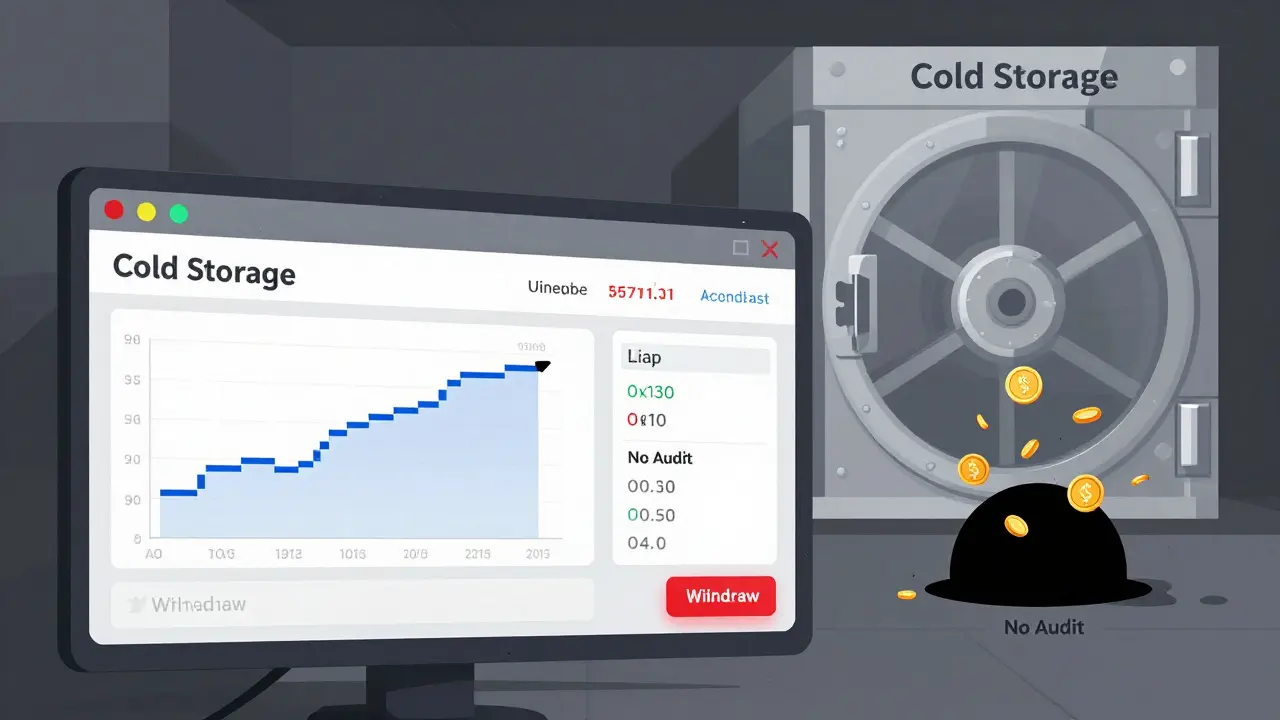
Coinquista says it uses “industry-standard encryption” and “cold storage” for user funds. That’s standard phrasing-every exchange says that. But where’s the proof? No public wallet addresses are listed for verification. No third-party audit reports from firms like CertiK or Hacken. No multi-sig setup details. No evidence of penetration testing.
Compare that to Binance, which publishes its Proof of Reserves monthly. Or Coinbase, which is licensed in multiple U.S. states and holds insurance for custodial assets. Coinquista offers none of that. If you’re depositing money here, you’re trusting a company with zero public transparency.
Supported Coins and Trading Pairs
The website lists over 150 cryptocurrencies, including Bitcoin, Ethereum, Solana, Cardano, and a handful of obscure tokens like Shiba Inu, Dogecoin, and smaller DeFi projects. That sounds impressive-until you try to trade them.
Real trading volume on Coinquista is nearly invisible. On CoinGecko and CoinMarketCap, Coinquista doesn’t appear in the top 500 exchanges by volume. That means liquidity is thin. If you try to sell 10 ETH, you’ll likely get a bad price because there aren’t enough buyers. Slippage becomes a real problem.
Trading pairs are limited too. Most altcoins only trade against BTC or USDT. You won’t find direct ETH-to-SOL trades, or fiat on-ramps like GBP or EUR deposits. That forces users to first buy Bitcoin or USDT on another exchange, then move it to Coinquista. That adds extra steps, fees, and risk.
Fees: Hidden Costs Everywhere
Coinquista claims “low fees.” But when you dig into the fine print, it’s not that simple.
Trading fees are listed as 0.1% per trade, which is average. But deposit fees? Not listed. Withdrawal fees? Vary wildly depending on the coin-with no clear schedule. One user on a niche forum reported paying $15 to withdraw 0.2 BTC. That’s more than the trading fee on most major exchanges.
There’s also a hidden 0.5% fee for converting between coins on the platform. So if you want to swap ETH to LTC, you pay 0.1% to trade and another 0.5% to convert. That’s not standard. Most exchanges charge one fee per trade, regardless of conversion.
And don’t expect clear fee breakdowns before you confirm a transaction. Many users report seeing unexpected charges after the fact.
User Experience: Clunky and Outdated
The Coinquista website looks like it was designed in 2018. The interface is cluttered, slow to load, and lacks basic features like price alerts, chart overlays, or order types beyond market and limit.
The mobile app? It’s barely functional. Android users report crashes on launch. iOS users say the app doesn’t sync balances correctly. Customer support responds in 3-5 days, if at all. And when they do reply, it’s usually a copy-paste template: “We’re sorry for the inconvenience.”
Compare that to Kraken’s clean interface, or Bybit’s advanced charting tools. Coinquista feels like a side project, not a professional trading platform.
Regulation and Legal Status
This is the biggest red flag.
Coinquista does not appear on any official financial regulator’s list. Not the UK’s FCA. Not the EU’s ESMA. Not the U.S. SEC. Not even Malta’s MFSA, which is known for being crypto-friendly.
That means if something goes wrong-your account gets hacked, your withdrawal gets frozen, or the platform disappears-you have no legal recourse. No ombudsman. No insurance fund. No government agency to file a complaint with.
Regulated exchanges like Coinbase or Bitstamp are required to follow strict rules: KYC checks, AML procedures, fund segregation, and regular reporting. Coinquista follows none of that. It operates in a legal gray zone.
Who Is Coinquista For?
There’s one type of trader who might consider Coinquista: someone who already has crypto and wants to try a new platform with no other options. Maybe they’re in a country where major exchanges are blocked. Maybe they’re experimenting with a small amount of money they’re willing to lose.
But if you’re serious about trading-whether you’re holding Bitcoin long-term or day-trading altcoins-Coinquista is not the place. The lack of transparency, poor liquidity, outdated tech, and absence of regulation make it too risky.
There are dozens of better alternatives. Binance, Kraken, and Coinbase offer lower fees, better security, real customer support, and legal protection. Even smaller exchanges like Bitstamp or KuCoin have public audits and verified user bases.
Alternatives to Coinquista
- Binance: Highest liquidity, 500+ coins, advanced tools, and strong security. Not available in all countries, but the best overall.
- Kraken: Excellent for European users, regulated, transparent, and reliable withdrawals.
- Coinbase: Best for beginners, easy fiat on-ramps, insured custody, and simple interface.
- Bitstamp: One of the oldest exchanges, fully regulated in the EU, and trusted by institutions.
- KuCoin: Good for altcoins, low fees, and a decent mobile app.
None of these platforms have the same level of mystery as Coinquista. They all have public records, user reviews, and verifiable security practices.
Final Verdict
Coinquista isn’t a scam-yet. But it’s also not a trustworthy exchange. It lacks the transparency, security, and regulatory backing that serious traders demand. The absence of public data isn’t just inconvenient-it’s dangerous.
If you’re trading with real money, don’t risk it on Coinquista. Use a platform that proves it’s safe instead of just saying it is.
Stick with exchanges that publish audits, show liquidity, respond to support tickets, and are registered with financial authorities. Your coins deserve better.
Is Coinquista a legitimate crypto exchange?
Coinquista operates without regulatory licensing from any major financial authority, including the UK’s FCA or the EU’s ESMA. It doesn’t publish security audits, proof of reserves, or customer support records. While it hasn’t been confirmed as a scam, the lack of transparency makes it unreliable and risky for any meaningful trading or investment.
Can I withdraw my crypto from Coinquista?
Some users report being able to withdraw, but others have faced delays of 7-14 days with no explanation. Withdrawal fees are not clearly listed and can be unexpectedly high. There’s no public track record of reliable withdrawals, so you’re taking a gamble every time you try to move funds out.
Does Coinquista support GBP deposits?
No, Coinquista does not offer direct fiat on-ramps for GBP, EUR, or USD. You must first buy crypto on another exchange, then transfer it to Coinquista. This adds extra steps, fees, and exposure to price swings during transfers.
Are there better alternatives to Coinquista?
Yes. Binance, Kraken, Coinbase, Bitstamp, and KuCoin all offer better security, lower fees, higher liquidity, and regulatory compliance. They also have verified user reviews, responsive support, and public audits. Coinquista doesn’t compete on any of these fronts.
Why is there so little information about Coinquista?
Most legitimate exchanges are covered by financial news sites, Reddit communities, and crypto analysts. Coinquista isn’t. The lack of coverage isn’t an accident-it’s a warning sign. If a platform doesn’t want to be seen, that’s usually because it doesn’t want to be scrutinized.
Chevy Guy
December 17, 2025 AT 17:05They say Coinquista is a scam but they never show the proof lol
Amy Copeland
December 17, 2025 AT 20:46Oh wow another crypto platform that doesn't have a Wikipedia page? Shocking. I guess I'll just throw my life savings into a Discord server with a guy named 'CryptoKing420' who says he's 'verified' by 'the blockchain gods'.
Mark Cook
December 18, 2025 AT 16:31Wait so you're saying if it's not on Binance it's trash?? 😳 I mean... what about the little guys?? 🤔
Jack Daniels
December 19, 2025 AT 23:48I used to trade on Coinquista... lost everything. Now I just stare at my empty wallet and wonder if the moon landing was real.
Bradley Cassidy
December 20, 2025 AT 07:05Man I tried Coinquista once and it was like trying to use a flip phone in 2024… the UI was a mess and my withdrawal took longer than my last relationship 😅 but hey at least it didn’t crash… yet?
Craig Nikonov
December 20, 2025 AT 18:00No regulatory oversight? No audits? That’s not a startup, that’s a honeypot. The silence speaks louder than any whitepaper.
Donna Goines
December 21, 2025 AT 11:09Everyone’s acting like this is some new thing… but I’ve seen this movie before. No transparency, no support, no history… then one day the site just goes dark. I remember 2018, I remember the FTX collapse… this is the same script.
Greg Knapp
December 22, 2025 AT 03:22Why do people even care about audits? Just send your coins and hope for the best. I did and I got my money back. Maybe they're just shy
Shruti Sinha
December 23, 2025 AT 06:48I live in India and Coinquista was the only option when I started. I used small amounts. No issues. But I never held more than I could afford to lose. Simplicity is key.
Cheyenne Cotter
December 24, 2025 AT 03:21Look I get it, everyone’s scared of unregulated platforms, but let’s be real - the entire crypto space is a wild west. If you need a bank to hold your hand, maybe you shouldn’t be here. Coinquista might not be fancy, but it’s not trying to sell you a dream - it’s just there, quietly, doing its thing.
Sean Kerr
December 25, 2025 AT 09:04Guys, don’t panic!! 🙌 I’ve been using Coinquista for 2 years and I’m still here!! 🚀 Maybe the fees are weird and the app glitches… but hey, I’ve made 3x on some altcoins!! 💪 Stay strong!! 💯
Heather Turnbow
December 25, 2025 AT 09:21While the concerns raised in this review are valid and substantiated, I would respectfully suggest that the absence of regulatory oversight does not inherently equate to malfeasance. It may, however, indicate a lack of institutional ambition - a distinction worth noting for risk-averse participants.
Sue Bumgarner
December 25, 2025 AT 16:25USA has the best exchanges. If you’re using some random site from Eastern Europe, you’re asking for trouble. This is why America leads the world.
Kayla Murphy
December 25, 2025 AT 18:50You’ve got this! Don’t let fear stop you from exploring new opportunities. Every giant started small. Maybe Coinquista is the next big thing… just wait and see 🌱✨
Emma Sherwood
December 25, 2025 AT 19:32For those in developing regions, access matters. Not everyone can use Binance. Coinquista might be clunky, but it’s a lifeline. Let’s not dismiss tools just because they’re imperfect - let’s help them improve.
Florence Maail
December 26, 2025 AT 02:43They're hiding something... I know it. The same people who ran the 2017 ICO scams are behind this. They just changed the logo. 🕵️♀️💸