Buying Bitcoin in Tunisia is not just difficult; it is a criminal offense. If you are looking to trade, mine, or even accept cryptocurrency as payment for your small business, you are walking into legal trouble. The Central Bank of Tunisia (BCT) maintains one of the strictest cryptocurrency bans in the world, enforced since May 2018.
This isn't a vague guideline. It is a hard line. For anyone living in or doing business with Tunisia, understanding these restrictions is critical to avoiding prison time or heavy fines. While the rest of the world debates regulation and integration, Tunisia has chosen total prohibition on public crypto markets, driven by fears of capital flight and money laundering.
The Core Restriction: What Is Actually Banned?
To understand the risk, you need to know exactly what the law prohibits. The BCT’s directive from 2018 does not leave much room for interpretation. It bans all transactions involving "virtual money" without explicit state authorization. Since no such authorization exists for the general public, the entire ecosystem is off-limits.
Here is what is explicitly illegal:
- Trading and Exchanges: You cannot buy or sell cryptocurrencies like Bitcoin, Ethereum, or USDT through any platform. Operating an exchange service within Tunisia carries penalties of up to five years in prison.
- Payments: Merchants are prohibited from accepting digital assets for goods or services. Even if you try to price your online store in crypto, you must operate offshore to avoid detection.
- Mining: Importing ASIC miners or other specialized hardware is blocked by customs. Authorities actively seize this equipment at borders. Furthermore, converting mined coins back into Tunisian dinars is a violation of currency control laws.
- Marketing and Promotion: Promoting tokens or initial coin offerings (ICOs) to Tunisian residents is considered a financial crime.
The logic behind this blanket ban is monetary sovereignty. The government fears that widespread crypto adoption would lead to massive capital flight, draining foreign reserves and destabilizing the national economy. In a country already facing economic pressures, protecting the value of the dinar takes precedence over financial innovation.
Why Did Tunisia Ban Crypto? The Historical Context
The current zero-tolerance policy didn't appear overnight. Between 2013 and 2017, Tunisia existed in a regulatory gray area. During this period, Bitcoin trading happened largely underground, facilitated through peer-to-peer chat rooms and informal networks. There was no formal oversight, but there was also no active enforcement.
This ambiguity ended in May 2018. The Central Bank issued its definitive directive, citing specific concerns about money laundering and the potential for citizens to bypass strict capital controls. The move aligned Tunisia with a small group of nations-including China, Egypt, Algeria, Morocco, Qatar, Nepal, and Bangladesh-that opted for total prohibition rather than regulated acceptance.
A pivotal moment in public awareness occurred in 2021. A teenager was imprisoned for exchanging a relatively small amount of cryptocurrency. This case sparked high-level cabinet discussions about decriminalization and raised questions about the proportionality of the punishment. However, despite the public outcry, no policy changes were implemented. The ban remained intact, signaling that the government’s priority remains strict control over financial flows.
The Paradox: Blockchain Innovation vs. Crypto Prohibition
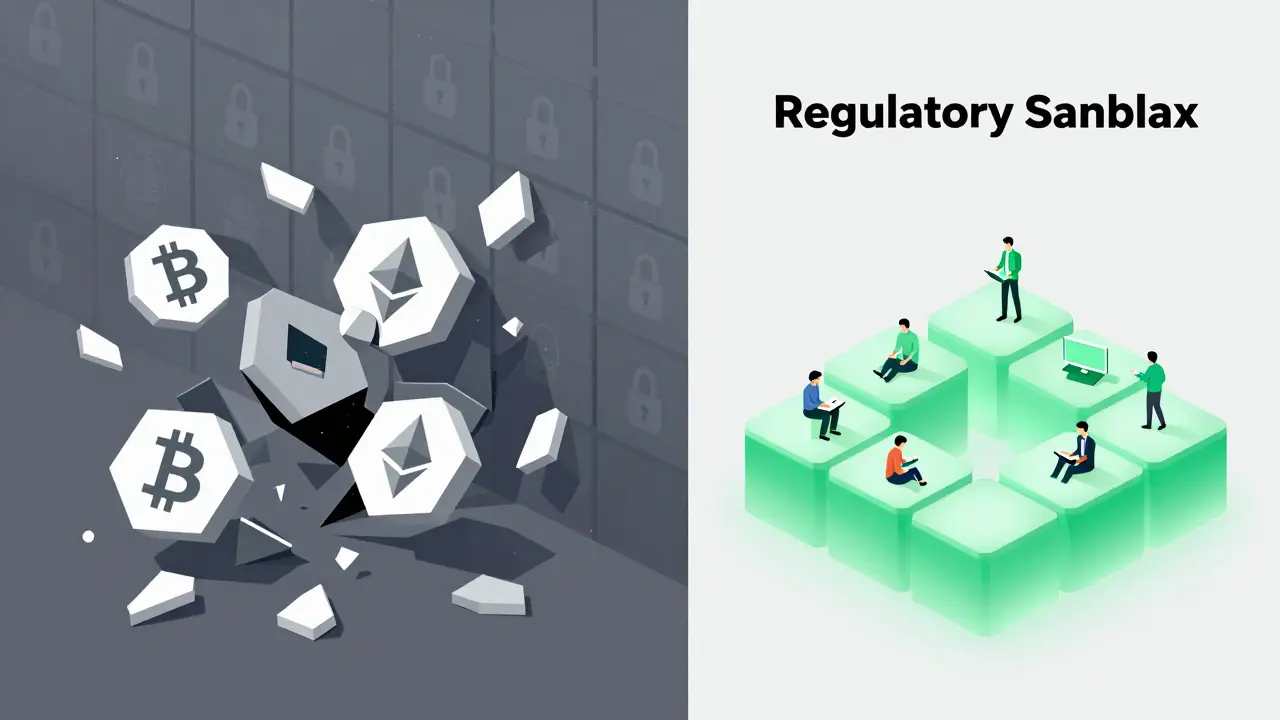
If the ban is so strict, why do we hear about blockchain projects in Tunisia? Here lies the complexity of the current landscape. While the BCT bans decentralized cryptocurrencies, it simultaneously explores controlled blockchain technology through a regulatory sandbox program launched in 2020.
This creates a dual reality:
| Feature | Public Cryptocurrency (e.g., Bitcoin) | Regulatory Sandbox Projects |
|---|---|---|
| Legal Status | Illegal / Criminalized | Permitted under supervision |
| Access | General Public | Select Fintech Startups Only |
| Technology Type | Decentralized / Permissionless | Permissioned / Private Ledgers |
| Purpose | Investment / Payment | Traceability / Efficiency Testing |
| Duration | N/A | 6-12 Months per Cohort |
The sandbox allows small groups of fintech companies to test blockchain solutions for payments, remittances, and supply chain traceability. These tests are tightly supervised, with strict limits on user numbers and transaction volumes. Local startups like VFunder (crowdfunding), Hydro E-Blocks (carbon tracking), and No Phobos (AI-generated NFTs) have participated. However, most of these companies host their infrastructure outside Tunisia to mitigate risk, using the sandbox primarily for research and local validation rather than open-market deployment.
This approach reflects the government’s stance: they want the efficiency benefits of blockchain-such as transparent land registries or targeted subsidy distribution-but only on permissioned ledgers where the state retains full control. Decentralization, which is the core feature of cryptocurrencies, is viewed as a threat, not a benefit.
Enforcement Mechanisms: How They Catch Violators
You might wonder how a total ban is enforced in a digital age. The answer lies in the intersection of banking regulations and border control. Tunisian banks are strictly prohibited from facilitating any cryptocurrency-related transactions. If you try to use your local debit card to buy crypto on a foreign exchange like Binance or Coinbase, the transaction will likely be blocked or flagged.
Customs authorities play a significant role in enforcement, particularly regarding mining. Officers at major entry points actively monitor shipments for ASIC rigs and other mining hardware. Seizure is common, and importing such equipment violates the 2018 directive. For individuals, the risk comes from holding crypto assets. While personal wallets are harder to detect, any attempt to convert those assets into Tunisian dinars through unofficial channels triggers anti-money laundering (AML) alerts.
The penalties are designed to be deterrents. Beyond the five-year prison sentence for operating exchanges, substantial fines are imposed for violations of currency-control regulations. This creates a chilling effect, pushing most crypto activity either completely underground or forcing participants to use offshore entities and complex workarounds that carry their own risks.
Future Outlook: Will the Ban Lift?
As of mid-2026, there is no indication that the Central Bank of Tunisia plans to lift the ban. Economic challenges, including domestic borrowing concerns and debates over central bank independence, continue to shape policy. The government remains wary of any tool that could facilitate capital flight.
However, the continued operation of the regulatory sandbox suggests a nuanced evolution. The government recognizes the potential of distributed ledger technology for improving transparency in sectors like agriculture and public administration. The key question is whether this interest will eventually extend to digital currencies.
International pressure may also play a role. Tunisia participates in the Financial Stability Board (FSB) Middle East and North Africa Regional Consultative Group, where cross-border payments and crypto-asset recommendations are regularly discussed. As neighboring countries explore more flexible frameworks, Tunisia may face increased scrutiny. Yet, given the severity of the 2018 directive and the lack of change following the 2021 imprisonment case, investors and users should assume the status quo will persist for the foreseeable future.
Risks for Businesses and Individuals
If you are considering engaging with crypto while based in Tunisia, the risks are severe. For businesses, attempting to accept crypto payments can result in frozen accounts, audits, and criminal charges. For individuals, the primary danger is the loss of funds due to unregulated peer-to-peer trades, coupled with the legal threat of prosecution.
There is no safe harbor. Unlike in countries with clear regulatory guidelines, Tunisia offers no path to compliance for mainstream crypto activities. The only legally permissible way to interact with blockchain technology is through approved sandbox programs, which are reserved for specific fintech innovators under direct government supervision.
For now, the message from the Central Bank is clear: protect the dinar, block the crypto, and innovate only under lock and key.
Is Bitcoin legal in Tunisia?
No, Bitcoin and all other cryptocurrencies are illegal in Tunisia. The Central Bank of Tunisia banned all virtual currency transactions in May 2018. Buying, selling, or using Bitcoin can result in fines or imprisonment.
Can I mine cryptocurrency in Tunisia?
Mining is effectively illegal. Customs authorities frequently seize mining equipment like ASIC rigs at borders. Additionally, converting mined coins into Tunisian dinars violates currency control laws and can lead to severe penalties.
What happens if I get caught trading crypto?
Violations can carry penalties of up to five years in prison and substantial fines. Banks are required to block crypto-related transactions, making detection easier for authorities.
Does Tunisia allow any blockchain technology?
Yes, but only in a controlled environment. The Central Bank operates a regulatory sandbox since 2020, allowing select fintech startups to test permissioned blockchain solutions for supply chains and payments under strict supervision.
Will Tunisia legalize crypto in the future?
There are no current plans to legalize public cryptocurrency use. The government prioritizes preventing capital flight and maintaining monetary sovereignty. While blockchain innovation is explored in sandboxes, the ban on decentralized crypto remains firm.