Bitladon was once one of the easiest ways for Europeans to buy cryptocurrency without needing to understand wallets, private keys, or complex trading interfaces. Launched in mid-2017, it quickly became popular for its simple design and fast bank transfers. But if you search for Bitladon today, you won’t find it. The platform doesn’t exist anymore - at least not under that name. On February 1, 2023, Bitladon quietly rebranded to BCM Exchange. The old website redirected, the branding changed, and the name Bitladon was retired. This isn’t a shutdown. It’s a transition. And understanding what happened helps you make sense of what’s available now.
What Was Bitladon?
Bitladon wasn’t a traditional exchange like Binance or Kraken. It didn’t let you place limit orders or trade with advanced charts. Instead, it acted like a broker. You picked a cryptocurrency - say, Bitcoin or Ethereum - and bought it directly at a fixed price. No order book. No slippage. Just click, pay, and get your crypto. The whole process was designed for people who didn’t want to learn how blockchain works. You didn’t need a wallet. Bitladon stored your coins for you. That made it safe for beginners but also meant you didn’t have full control over your assets.The platform was based in Aalsmeer, Netherlands, and operated under Coin Meester B.V., a company registered with the Dutch Central Bank. That registration wasn’t just a formality. It meant Bitladon followed strict European anti-money laundering rules. Users had to verify their identity with a passport, proof of address, a selfie holding their ID, and a linked mobile number. This wasn’t unique, but it was thorough. And for European users, that level of compliance made the platform feel trustworthy.
How Bitladon Made Trading Simple
One of Bitladon’s standout features was its "Any to Any" trading function. Most exchanges require you to sell your crypto for euros first, then buy the new coin. Bitladon cut out the middleman. Want to swap your Ethereum for Storj? Just select both, and the system handled the trade internally - no extra fees, no waiting. It was built using a partnership with Changelly, a well-known crypto swap service. This made it easy to switch between coins without dealing with multiple transactions or price swings.Bitladon supported over 190 cryptocurrencies at its peak. That included major coins like Bitcoin, Ethereum, and Litecoin, but also smaller ones like Electra and PundiX. For users who wanted exposure to niche tokens, this was rare. Most brokers only offered Bitcoin and Ethereum. Bitladon gave you access to dozens more.
Payment methods were tailored for Europe. You could deposit euros using iDEAL (Netherlands), Bancontact (Belgium), Giropay (Germany), and SOFORT. Bank transfers worked instantly through IBAN, and deposits cleared within minutes. Withdrawals were just as fast. And unlike many exchanges, Bitladon didn’t charge fees for deposits or withdrawals. You only paid the trading fee and the network fee (which went to the blockchain, not Bitladon).
Fees and Limits
Bitladon’s standard trading fee was 2% per order. That sounds high compared to exchanges like Coinbase or Kraken, which charge under 1%. But Bitladon made up for it with simplicity. If you traded €10,000 in a 30-day period, you qualified for VIP status. Fees dropped to 1.5%. At €50,000, they fell to 1%. And at €250,000, you could get as low as 0.25%. That made it worth it for active traders.There was a minimum purchase of €9 per coin. No smaller buys. But there was no maximum - unless you were unverified. Verified users could trade up to €100,000 per week. Need more? Contact support. They’d review your case. That flexibility was unusual. Most platforms cap you at €5,000 or €10,000 unless you jump through hoops.
Security and Support
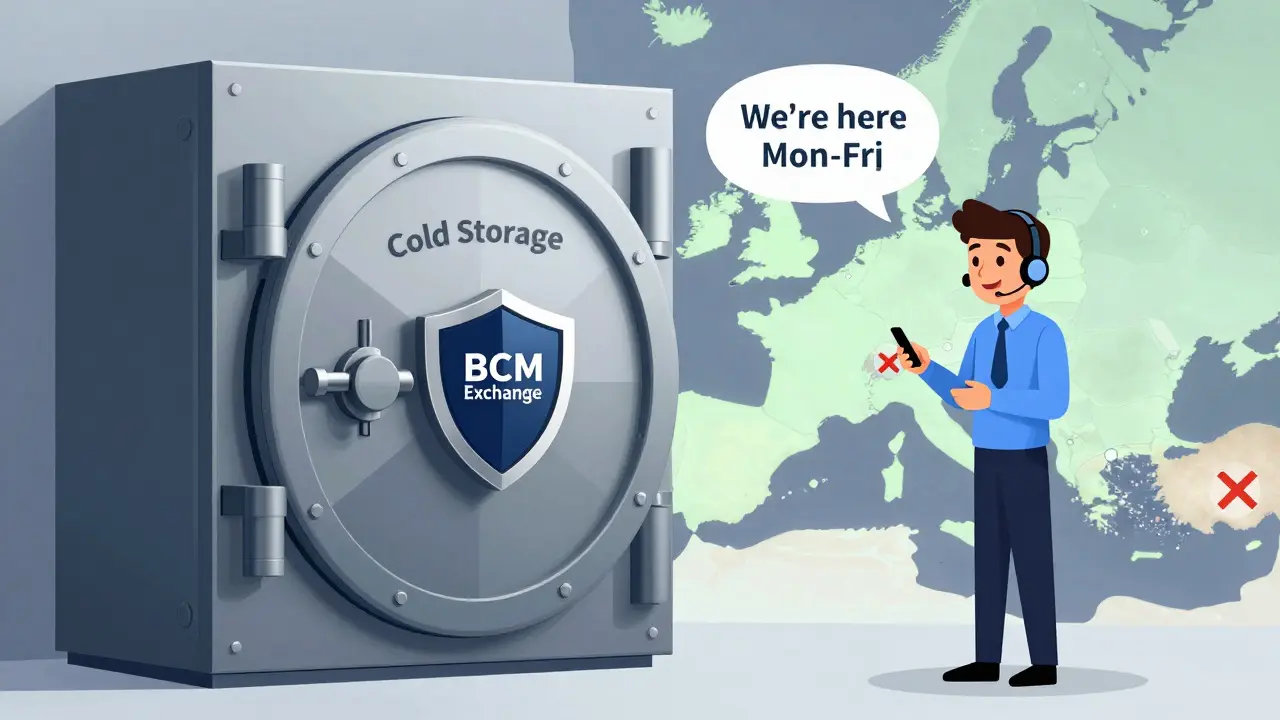
Bitladon never suffered a major hack. That’s impressive. In crypto, even big exchanges get breached. Bitladon kept all funds in cold storage and used two-factor authentication via Google Authenticator. Account logins required email verification too. No known incidents of stolen user funds were reported during its operation.Customer support was one of its strongest points. Available Monday to Friday, 9 AM to 5 PM CET. You could reach them by phone, email, or live chat. Email replies typically came within an hour. Phone support was direct - no automated menus. Users reported that support staff were polite, knowledgeable, and quick to resolve issues. The only downside? No weekend support. If you had a problem on Saturday, you waited until Monday.
Why Bitladon Couldn’t Last
Bitladon’s model was simple, but that simplicity became a limitation. As crypto evolved, users wanted more control. They wanted to move coins to their own wallets. They wanted to trade with lower fees. They wanted access to staking, lending, and DeFi. Bitladon didn’t offer any of that. It was a broker, not a full exchange.Regulatory pressure also increased. The Netherlands tightened rules on crypto businesses. Compliance costs rose. Bitladon’s parent company, Coin Meester B.V., decided to pivot. Instead of fighting the market, they rebranded. On February 1, 2023, Bitladon became BCM Exchange. The same team. The same platform. Same Dutch registration. Just a new name.
What Replaced Bitladon: BCM Exchange
BCM Exchange is the direct successor. It keeps the same interface, the same fee structure, the same payment methods, and the same focus on European users. The "Any to Any" feature is still there. The same KYC process applies. The same customer support hours. The only difference? The logo and the domain.If you used Bitladon before, you didn’t lose access. Your account automatically transferred to BCM Exchange. Your coins are still there. Your verification is still valid. You just log in at bcmexchange.com now.
BCM Exchange hasn’t added major new features yet. It’s still focused on simplicity. But it’s alive. And for Europeans who want an easy, regulated way to buy and swap crypto without technical hassle, it’s still one of the best options.
Who Should Use BCM Exchange Today?
BCM Exchange (formerly Bitladon) is ideal for:- European residents who want to buy crypto with euros
- People who don’t want to manage private keys or wallets
- Traders who need to swap between 150+ cryptocurrencies quickly
- Users who value regulatory compliance and security
It’s not for:
- US citizens - they’re blocked
- Advanced traders who need limit orders or margin trading
- People who want to stake crypto or earn interest
- Those who prefer full custody of their coins
There are better exchanges if you want more features. But if you want fast, simple, regulated crypto trading in Europe - with no learning curve - BCM Exchange is still one of the cleanest options left.
Final Thoughts
Bitladon didn’t fail. It evolved. Its legacy lives on in BCM Exchange. The platform filled a real need: making crypto accessible to non-tech-savvy Europeans. It did that well for six years. Now, BCM Exchange carries that mission forward. The name changed. The mission didn’t.If you’re in Europe and want to buy Bitcoin, Ethereum, or even obscure altcoins without jumping through hoops - check out BCM Exchange. It’s the same service, just with a new name.
Is Bitladon still operating as a separate exchange?
No. Bitladon ceased operations on February 1, 2023, and was officially rebranded as BCM Exchange. All users were migrated to the new platform. The original Bitladon website now redirects to bcmexchange.com. Any mention of Bitladon today refers to the old brand, not an active service.
Can I still use my old Bitladon account?
Yes. Your Bitladon account was automatically transferred to BCM Exchange. You log in using the same email and password. Your cryptocurrency holdings, verification status, and trading history are all intact. No action was required on your part - the transition happened in the background.
Does BCM Exchange support US users?
No. BCM Exchange, like Bitladon before it, only serves users in European countries. It does not accept US residents due to regulatory restrictions. The platform is designed around European banking systems like iDEAL, Bancontact, and SOFORT, and is registered with Dutch financial authorities - which limits its scope to the EU.
What are the trading fees on BCM Exchange?
The base trading fee is 2% per order. However, users who trade more than €10,000 in a 30-day period can qualify for VIP status, which reduces fees down to 0.25%. There are no fees for depositing or withdrawing euros or cryptocurrencies. Only blockchain network fees apply when sending crypto out.
Is BCM Exchange safe and regulated?
Yes. BCM Exchange is operated by Coin Meester B.V., a company registered with the Dutch Central Bank (De Nederlandsche Bank). It complies with European AML (anti-money laundering) and KYC regulations. The platform uses two-factor authentication, cold storage for assets, and has never experienced a security breach. It is one of the few crypto platforms in Europe with official financial registration.
Can I withdraw my crypto from BCM Exchange to my own wallet?
Yes. While BCM Exchange stores your crypto by default, you can withdraw any supported coin to an external wallet. Just go to the withdrawal section, enter your wallet address, and confirm the transaction. Network fees apply, but BCM Exchange does not charge extra for withdrawals.
Does BCM Exchange offer mobile apps?
No. BCM Exchange does not have a dedicated mobile app. The platform is web-based and works on mobile browsers. The interface is responsive and optimized for phones, but there is no official iOS or Android app available. Most users access it through their browser on smartphones or tablets.
How long does verification take on BCM Exchange?
Verification typically takes 1-2 business days. You need to upload a government-issued ID, proof of address, a selfie holding your ID, and verify your mobile number. Once submitted, the team reviews your documents manually. If everything is clear, approval comes within 24-48 hours. Delays happen if documents are blurry or incomplete.
Shreya Baid
March 22, 2026 AT 02:37As someone who's helped many beginners in India navigate crypto, I find BCM Exchange's approach deeply respectful. No overcomplicated interfaces, no pressure to 'decentralize everything'-just a clean, regulated path to own digital assets. This is what responsible innovation looks like. The Dutch registration alone gives me more peace of mind than half the DeFi protocols out there. Thank you for keeping it simple for those who aren't engineers.
Christopher Hoar
March 23, 2026 AT 23:58lol so bitladon just changed its name and now its ‘bcm’? like wow such innovation. next they’ll rename to ‘crypto4dummies.exe’ and charge 2% for breathing. why not just call it ‘boringbank’? at least then you’d know what you’re getting.
Robert Kunze
March 24, 2026 AT 20:24wait so you mean i can still use my old login? i thought i lost everything when i saw the site was gone. i’ve been holding eth and xmr since 2021 and was scared i’d have to reverify. glad it was just a rebrand. also the any to any feature saved me so much time swapping between coins. no more 3-step trades. just click, done. still the easiest way for me.
Sarah Zakareckis
March 25, 2026 AT 14:14YESSSS! This is the kind of platform we need more of! Regulatory compliance isn’t a buzzword-it’s safety. BCM keeps it simple, secure, and *accessible*. No need to become a blockchain engineer just to buy ETH. The 2% fee is fair for the UX alone. And the fact they support SOFORT and Bancontact? Chef’s kiss. For non-tech-savvy Europeans, this is the gold standard. Keep it real, BCM.
Heather James
March 26, 2026 AT 13:06It’s still here. Just with a new logo.
Sarah Hammon
March 26, 2026 AT 18:51i was so confused when i went to bitladon and it just redirected. i thought i got hacked or something. then i saw the bcm exchange page and realized ohhh. i’ve been using it since 2020 and i’m so glad they didn’t shut down. i love how you can swap like 50 different coins without converting to usdt first. also the support team is actually nice. one time i sent coins to the wrong address and they helped me track it down. rare.
iam jacob
March 28, 2026 AT 17:29so let me get this straight… you pay 2% to have someone else hold your crypto? and you can’t even stake? what a joke. you’re not investing, you’re renting. if you don’t control your keys, you don’t own anything. just sayin’.
Jesse Pals
March 30, 2026 AT 13:44BCM for the win 🙌 finally a platform that gets it! no app needed, just a clean website that works on my phone. i’ve used binance, kraken, coinbase… and honestly? none of them are this chill. i just want to swap my xmr for ada on a friday night without reading a 10-page manual. this is it. also the support chat is like talking to a real person. no bots. no wait. pure magic.
Diane Overwise
March 31, 2026 AT 16:47Oh, so Bitladon didn’t collapse. It just… became the corporate version of itself. How poetic. The Dutch Central Bank must be so proud. I’m sure the 2% fee is ‘fair’ if you’re paying for the privilege of being babysat by a regulated entity. How very European. I, personally, would rather lose my coins to a rug pull than pay to be told I’m ‘not ready’ for self-custody.
Ann Liu
April 2, 2026 AT 07:05The transition from Bitladon to BCM Exchange was handled with regulatory precision. Coin Meester B.V. maintained its DNB registration, ensuring continuity of AML/KYC compliance. The platform’s retention of the Any-to-Any functionality, coupled with zero deposit/withdrawal fees, represents a significant UX advantage over decentralized alternatives that require multiple hops and higher gas fees. This is not a rebrand-it is an evolution of a compliant, user-centric infrastructure.
Dionne van Diepenbeek
April 4, 2026 AT 06:37why do you need a platform that holds your coins for you if you dont trust yourself to use a wallet i mean its 2024
Graham Smith
April 5, 2026 AT 02:482% fee? That’s a tax on ignorance. Real traders use limit orders, LP pools, and cross-chain bridges-not a broker that locks your assets in a custodial vault. BCM is a relic. A beige, regulated, non-custodial-adjacent relic. If you’re not running a node or using a hardware wallet, you’re not in the game. You’re in the lobby.
anshika garg
April 7, 2026 AT 01:03I think about how much we’ve changed. Five years ago, I didn’t even know what a private key was. Now I have a cold wallet, a Ledger, a backup phrase, and I still sometimes use BCM for quick swaps. It’s not about being tech-savvy. It’s about having options. Bitladon gave me my first crypto. BCM lets me keep it simple when I’m tired. We don’t all need to be anarchists. Sometimes, peace is just a clean interface and a verified bank link.
Bruce Doucette
April 8, 2026 AT 16:10Oh great, another ‘regulated’ platform. Next they’ll ask for your zodiac sign and blood type. 2% fee? For what? To stare at your coins while they sit in cold storage? lol. If you’re not holding your own keys, you’re not holding crypto. You’re holding a receipt. And that receipt? It’s only as good as the next government audit. 🤡
Jessica Beadle
April 9, 2026 AT 02:08Let’s be real-BCM is just a rebranded middleman with a Dutch stamp. You’re not ‘investing,’ you’re paying for convenience. And let’s not pretend the ‘Any to Any’ feature is revolutionary. It’s just a wrapper around Changelly. You’re still not getting exposure to DeFi yields, liquidity pools, or governance. You’re stuck in a gated garden with a 2% gatekeeper fee. If you want real crypto, you need to go deeper. This is crypto for people who still think ‘wallet’ is a fashion accessory.
Tony Weaver
April 9, 2026 AT 09:33Let’s unpack this. A platform that doesn’t let you trade limit orders, doesn’t offer staking, doesn’t allow self-custody by default, and charges 2% for every swap… is this a financial service or a subscription to financial babysitting? The Dutch registration? Cute. That doesn’t protect you from regulatory capture. And don’t get me started on the ‘VIP’ tiers-only for those who trade six figures. So the platform profits from your activity but doesn’t empower you. Brilliant. Just brilliant.
Patty Atima
April 9, 2026 AT 10:30so i used bitladon back in 2019 and thought it was gone forever. found bcm yesterday and logged in with my old password. boom. all my coins there. no drama. no panic. just… worked. that’s rare in crypto. honestly? i’m not techy. i just want to buy btc and not think about it. this is the only place that gets that.
Lucy de Gruchy
April 10, 2026 AT 19:31Regulated? By the Dutch Central Bank? Ha. The same bank that let Silicon Valley Bank collapse. The same system that printed trillions. Crypto was supposed to escape this. Now we have a ‘crypto exchange’ that requires a selfie holding your ID? That’s not security. That’s surveillance. BCM isn’t the future. It’s the past dressed in blockchain pajamas.
Lauren J. Walter
April 11, 2026 AT 22:01I still remember when Bitladon was the only place I could buy crypto without getting a PhD. Now it’s BCM. Same interface. Same calm. Same lack of chaos. I don’t need to be a trader. I need to be safe. And honestly? I’m grateful.
Carol Lueneburg
April 12, 2026 AT 12:29YESSSSS to BCM! 🙏✨ I’ve been using it since 2020 and it’s been a total lifesaver. No app? No problem-mobile web works perfectly. Swapped my SOL for DOT last week in 2 clicks. Support replied in 15 mins. I’m not a tech wizard, but I know what feels good-and this feels GOOD. Keep doing what you’re doing, BCM-you’re helping real people. 💛