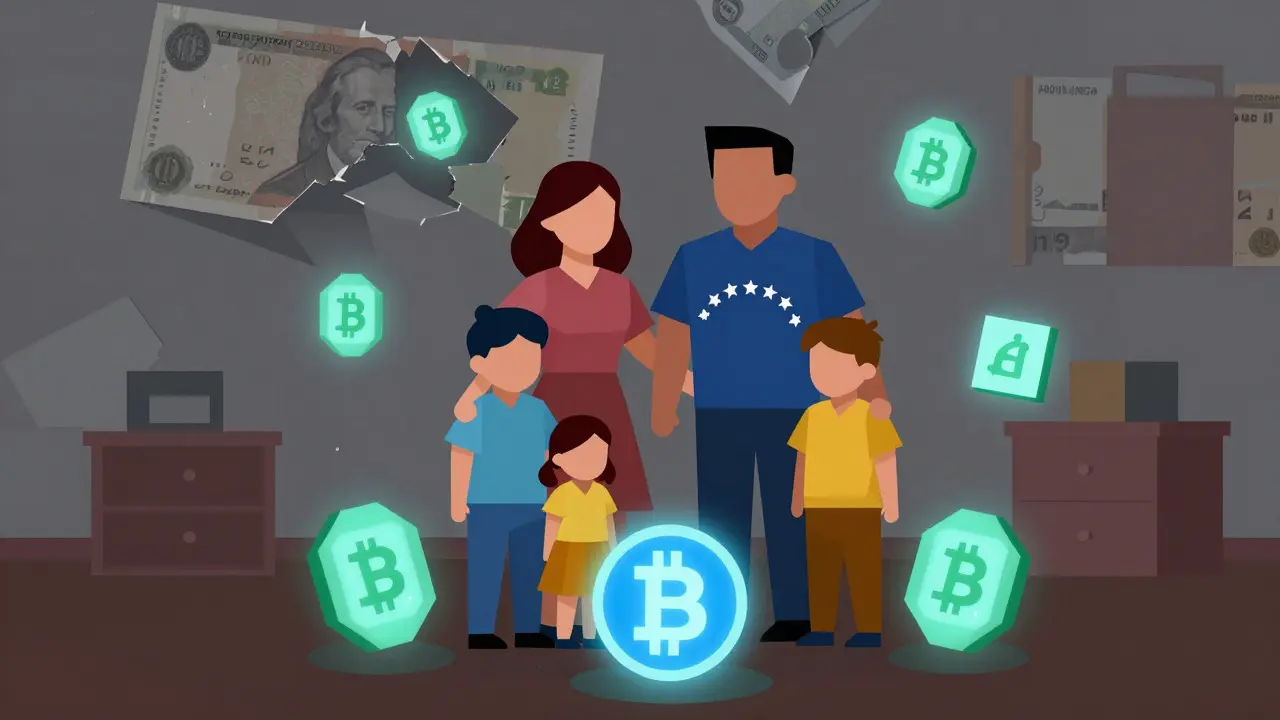
Imagine waking up to find your salary has lost half its value overnight. For millions of Venezuelans, this isn't a hypothetical nightmare; it is daily life. When the national currency, the bolívar, collapses under hyperinflation, traditional banking systems often fail or become inaccessible due to strict capital controls and international sanctions. In this vacuum, cryptocurrency has emerged not as a speculative investment for tech enthusiasts, but as a critical lifeline for basic survival. From buying groceries to receiving remittances from family abroad, digital assets have woven themselves into the fabric of everyday commerce.
Venezuela’s journey with digital money offers one of the most stark examples of how technology adapts to human necessity. It is a story of resilience, technical ingenuity, and the harsh realities of an economy forced to operate in the shadows. This article explores how Bitcoin and stablecoins like Tether (USDT) are used on the ground, the specific restrictions that shape their use, and what this means for the future of finance in Latin America.
The Driver: Hyperinflation and Currency Collapse
To understand why cryptocurrency adoption skyrocketed, you must look at the state of the bolívar. According to data from the Venezuelan Finance Observatory (OVF), annual inflation hit 229% in May 2024. Between October 2023 and June 2024 alone, the currency lost over 70% of its value after the government stopped actively defending its exchange rate. When your savings evaporate in months, holding cash becomes a losing game.
Citizens needed a way to preserve value. The solution was not ideological; it was practical. Economist Aarón Olmos noted that Venezuelans turned to crypto out of pure necessity, citing low wages, foreign currency shortages, and the difficulty of opening bank accounts. The Chainalysis 2024 Crypto Adoption Index ranked Venezuela 13th globally, with usage growing by 110% year-over-year. This growth wasn't driven by hope for wealth, but by the need to protect purchasing power against a collapsing fiat system.
| Metric | Value/Status | Source/Context |
|---|---|---|
| Annual Inflation Rate | 229% | Venezuelan Finance Observatory (May 2024) |
| Bolívar Devaluation | 70% loss | Oct 2023 - June 2024 period |
| Crypto Adoption Rank | 13th Global | Chainalysis 2024 Index |
| Private Sector Crypto Volume | $119 million/month | SUNACRIP data via AInvest (July 2025) |
Why Stablecoins Beat Bitcoin for Daily Use
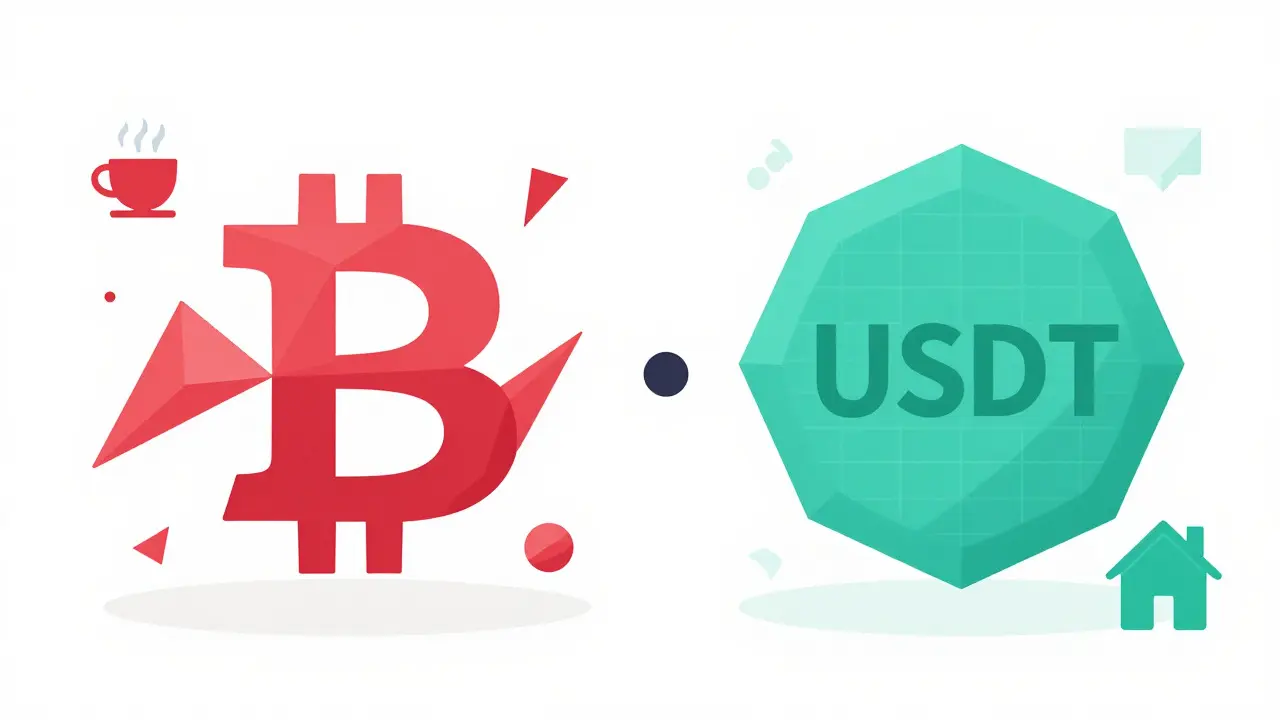
While Bitcoin (BTC) is the most famous cryptocurrency, it is not the primary tool for buying bread or paying rent in Caracas. Bitcoin’s price volatility makes it risky for daily transactions. If you buy coffee with Bitcoin today, the value might drop significantly by tomorrow. Instead, Venezuelans rely heavily on stablecoins, particularly Tether (USDT).
USDT is pegged to the U.S. dollar, meaning its value stays relatively constant. Locally, these tokens are often referred to as "Binance dollars." They provide the stability of the dollar without the physical limitations of paper money. According to CoinGape’s analysis in April 2025, USDT dominates daily transactions because it shields users from both bolívar devaluation and Bitcoin’s price swings. On the Tron network, USDT transactions confirm in under two minutes, making them practical for instant payments. In contrast, Bitcoin transactions can take 10 to 60 minutes during peak congestion, which is too slow for a quick market purchase.
This preference highlights a crucial distinction: in crisis economies, stability trumps decentralization. Users do not necessarily want to hold a volatile asset; they want a reliable store of value that bypasses local banking restrictions. Tether Limited controls approximately 76% of Venezuela’s stablecoin market, creating a dependency on a centralized issuer that carries its own risks, such as potential regulatory action against the company itself.
Navigating Restrictions: Sanctions and Infrastructure
Adopting cryptocurrency in Venezuela is not seamless. The ecosystem operates under heavy constraints, primarily driven by U.S. sanctions and poor infrastructure. Since 2017, U.S. sanctions have restricted traditional banking relationships for Venezuelan institutions. These sanctions also impact crypto platforms. Binance, for example, restricts services for accounts linked to sanctioned banks or individuals. FastBull reported in March 2025 that these restrictions block approximately 18% of attempted transactions, forcing users to constantly verify their status and avoid flagged entities.
Infrastructure poses another major hurdle. Venezuela ranks 153rd globally for internet speed, averaging just 14.79 Mbps download speeds in Q2 2025 according to Ookla’s Speedtest Global Index. While smartphone access covers 68% of the population, only 45% have reliable internet connectivity, per ITU data from February 2025. Frequent blackouts and slow connections mean that transaction failures are common. A survey by Markets.com in August 2025 found that 37% of respondents experienced connectivity issues affecting their trades, and 22% struggled to convert crypto to goods during network outages.
Despite these barriers, the peer-to-peer (P2P) model thrives. Platforms like Binance P2P and LocalBitcoins allow users to trade directly with each other using local payment methods, bypassing the need for formal bank integration. This decentralized approach turns every user into a mini-exchange, distributing risk and maintaining liquidity even when official channels freeze.
The Rise of P2P Trading and Digital Wallets
The backbone of Venezuela’s crypto economy is Peer-to-Peer (P2P) trading. This method allows buyers and sellers to transact directly, agreeing on prices and payment terms without an intermediary bank. Binance P2P dominates this space, holding a 63% market share of P2P trading volume, followed by LocalBitcoins at 22%, according to Chainalysis’ July 2025 report.
Digital wallets have become essential financial tools. Approximately 4.3 million Venezuelans, representing 13% of the population, use platforms like Binance Wallet and Airtm for daily financial management. These apps serve as digital piggy banks, payment processors, and remittance receivers all in one. The learning curve is steep but manageable; a University of Carabobo study from March 2025 showed that most new users master basic transactions within 2 to 3 weeks.
Community-driven education plays a vital role in this adoption. YouTube channels like 'Cripto Para Todos,' with 127,000 subscribers, provide tutorials in Spanish. Even academic institutions have adapted; the Universidad Central de Venezuela launched mandatory cryptocurrency courses in January 2025. This grassroots education ensures that even those without prior tech experience can navigate the complex world of private keys and wallet addresses.

Real-Life Impact: Commerce and Remittances
The impact of cryptocurrency extends beyond individual savings. It has reshaped local commerce. A survey of 1,200 businesses in Caracas by Markets.com in August 2025 revealed that over 65% of merchants accept cryptocurrency for routine transactions. Whether it is a phone accessory shop or a grocery store, QR codes for USDT payments are becoming as common as credit card terminals elsewhere.
Victor Sousa, a Caracas resident, explained his routine to the Financial Times: "There's lots of places accepting it now... The plan is to one day have my savings in crypto." Another user, Carlos, stated he uses USDT for everything from food to rent because it is "much more reliable than the bolivar." These testimonials highlight a shift from informal barter to a structured digital economy.
Remittances are another critical pillar. In 2023, crypto accounted for 9% of the $5.4 billion total remittance flow to Venezuela, equivalent to roughly $461 million. Sending money via traditional wire transfers can be slow, expensive, and subject to seizure or delay. Crypto remittances offer near-instant transfer times and lower fees, allowing families abroad to support relatives effectively despite political tensions.
Regulatory Uncertainty and Future Outlook
The regulatory landscape in Venezuela remains ambiguous. The government launched its own cryptocurrency, the Petro, in 2018, but it collapsed in 2024 amid corruption allegations. Simultaneously, authorities have cracked down on private exchanges, shutting down regulators like SUNACRIP in 2023. This creates a paradox: the state discourages formal crypto regulation while citizens rely on it for survival.
Experts remain divided on the long-term viability of this model. Sarah Blake of Chainalysis argues that crypto serves as a critical economic lifeline when traditional systems fail. Conversely, IMF Senior Advisor David Lipton cautions that digital assets provide only tactical relief and cannot replace sound monetary policy. Luisa Mendoza, an economist at the University of Caracas, warns that reliance on centralized stablecoins exposes users to significant risk if issuers face legal challenges.
Looking ahead, short-term projections suggest crypto adoption will remain essential until bolívar inflation drops below 50% annually-a threshold unlikely before 2027, according to IMF economists. Long-term, there is potential for integration with regional payment systems, such as the BRICS cross-border payment initiative discussed since February 2025. However, if the bolívar stabilizes, demand for crypto could plummet rapidly, leaving users exposed to the complexities of digital asset management without the immediate pressure of survival.
Is Bitcoin legal in Venezuela?
Yes, cryptocurrency is legal in Venezuela. The country passed a Crypto Assets Law in 2020, which provides a framework for digital assets. However, enforcement is inconsistent, and the government has occasionally cracked down on private exchanges while promoting its own failed token, the Petro. Citizens use crypto freely, but they must navigate a complex regulatory environment.
Why do Venezuelans prefer USDT over Bitcoin?
Venezuelans prefer USDT (Tether) because it is a stablecoin pegged to the U.S. dollar. Bitcoin’s price fluctuates wildly, making it risky for daily purchases like food or rent. USDT maintains a stable value, protecting users from both bolívar inflation and Bitcoin volatility. Additionally, USDT transactions on networks like Tron are faster and cheaper than Bitcoin transactions.
How do people buy crypto in Venezuela with no bank account?
Many Venezuelans use Peer-to-Peer (P2P) platforms like Binance P2P. These platforms allow users to buy crypto directly from other individuals using cash, mobile money transfers, or local payment apps. This bypasses the need for traditional bank accounts, which are often restricted or unreliable due to sanctions and capital controls.
What are the main risks of using crypto in Venezuela?
The main risks include technical failures due to poor internet connectivity, price volatility during conversion (slippage), and dependency on centralized stablecoin issuers like Tether. Additionally, U.S. sanctions can restrict access to certain platforms or block transactions if users are linked to sanctioned entities. There is also the risk of fraud or scams in the unregulated P2P market.
Will crypto adoption decline if the economy improves?
It is likely. Current adoption is driven by necessity rather than preference. If the bolívar stabilizes and inflation drops below 50%, many users may return to traditional banking for convenience. However, some experts believe that once integrated into daily commerce, crypto may persist as a parallel payment system due to its efficiency and lower costs compared to traditional banking.
Alex Di Mango
August 9, 2026 AT 00:59It is honestly heartbreaking to read about people using crypto just to buy groceries. We in the US take banking for granted, but seeing how Venezuelans are forced into this digital underground economy really puts things in perspective. It's not about getting rich quick here, it's pure survival. I hope the situation stabilizes soon because no one should have to worry about their internet connection dropping while trying to pay rent.
Nick Darring
August 9, 2026 AT 17:03You guys are missing the bigger picture entirely and frankly it is making my head spin with all this naive optimism floating around in these comments sections lately. The article says stablecoins are king but let us look at who actually controls Tether. It is a centralized entity that could freeze your assets if they wanted to so you are just trading one dictator for another corporate overlord. People think they are free but they are just lemmings jumping off a cliff into a digital trap set by Silicon Valley elites who don't give a damn about Caracas. And don't get me started on Bitcoin being too slow because apparently convenience matters more than sovereignty in your little minds. It is a fascinating study in human folly really how quickly we abandon decentralization when the going gets tough.
Amor Jordan
August 9, 2026 AT 21:27I feel like everyone needs to calm down and just listen to what is actually happening on the ground. It is terrifying to think about losing half your salary overnight. The resilience of these families is incredible, honestly. They are teaching themselves blockchain tech just to survive. It makes me want to hug them from across the ocean. We need more empathy and less judgment here.
Matthew Smith
August 10, 2026 AT 12:29The moral decay of society is evident when money becomes a game of chance rather than a store of value. Fiat is dead long live the algorithm. But beware the centralization of tether it is the snake in the garden of eden. Trust no one.
Aryan MISHRA
August 11, 2026 AT 02:55Let us be precise here; the adoption metrics cited are indicative of a liquidity crisis, not necessarily a technological triumph. The reliance on Tron network for USDT transfers suggests a preference for low-latency execution over true decentralization. Furthermore, the 18% transaction blockage rate due to sanctions is a critical friction point that undermines the narrative of seamless financial inclusion. One must consider the regulatory arbitrage occurring here. Is it sustainable? Doubtful. The infrastructure deficits, specifically the 14.79 Mbps average speed, create a bottleneck that exacerbates volatility during peak usage hours. This is not a scalable model for a national economy; it is a patch on a hemorrhaging wound.
Ryan Robinson
August 11, 2026 AT 20:40honestly i think its kinda cool how they adapted. most people would just give up but they found a way. maybe we can learn something from that hustle culture vibe
Earl Kott65
August 13, 2026 AT 13:57Oh wow, imagine having to learn crypto just to eat! 😱🤯 That is literally insane levels of stress. But hey, at least they are getting smart with their wallets! 💰🚀 Keep fighting the good fight Venezuela! You got this! 🇻🇪💪 #CryptoHeroes
Lorraine Surringer
August 14, 2026 AT 14:21i mean its sad but also kind of expected right? governments always mess up eventually. but seriously who has time to deal with private keys when you are hungry? sounds like a nightmare scenario for real life not some reddit post. ugh why is everything so complicated now days
Ethan Yuwono
August 14, 2026 AT 20:00it is interesting how necessity drives innovation faster than any government policy ever could. the fact that universities are now teaching crypto shows a shift in mindset that will last even after the crisis passes. knowledge is power and they are gaining both.
Jack Delasquez
August 15, 2026 AT 00:54This is amazinng!! So many ppl are using binance p2p. Its crazy how fast things change. Gotta love the tech revolution!!!
Harman Singh
August 16, 2026 AT 07:24why does everyone ignore the scams?? i know someone who lost everything to a fake exchange. its not all rainbows and unicorns. very sad really.
Qolbina Islami
August 16, 2026 AT 22:22America did this!!! Sanctions are the root cause!!!! Why are we blaming crypto instead of our own foreign policy failures?! It is outrageous that we punish innocent civilians for the sins of their leaders! Shame on Washington!
SUBHAM CHOUDHURY
August 18, 2026 AT 13:00Keep going everyone. Small steps lead to big changes. The community support through youtube channels is beautiful to see. Stay strong.
Joy Kwant
August 19, 2026 AT 02:33People deserve better than this chaotic system. It is morally bankrupt to rely on a volatile asset for basic human needs. The world should step in and fix this mess properly instead of letting them drown in digital debt.
Eden Tadesse
August 19, 2026 AT 11:24so true tho