Remember the hype around community-driven exchanges back in 2018? Bgogo was one of the biggest names then. It promised a "revolutionary" platform built by the community, for the community. It featured a unique supernode governance system and aggressive fee rebates using its native BGG token. But it is now May 2026. The crypto landscape has changed dramatically since that launch. So, you might be wondering: is Bgogo still operational? Is it safe? And should you even consider trading on it today?
The short answer is complicated. While Bgogo had a strong start with backing from Pantera Capital, recent data suggests the platform has faded into obscurity. For anyone holding old assets or curious about this once-promising project, here is the real deal.
What Was Bgogo’s Big Idea?
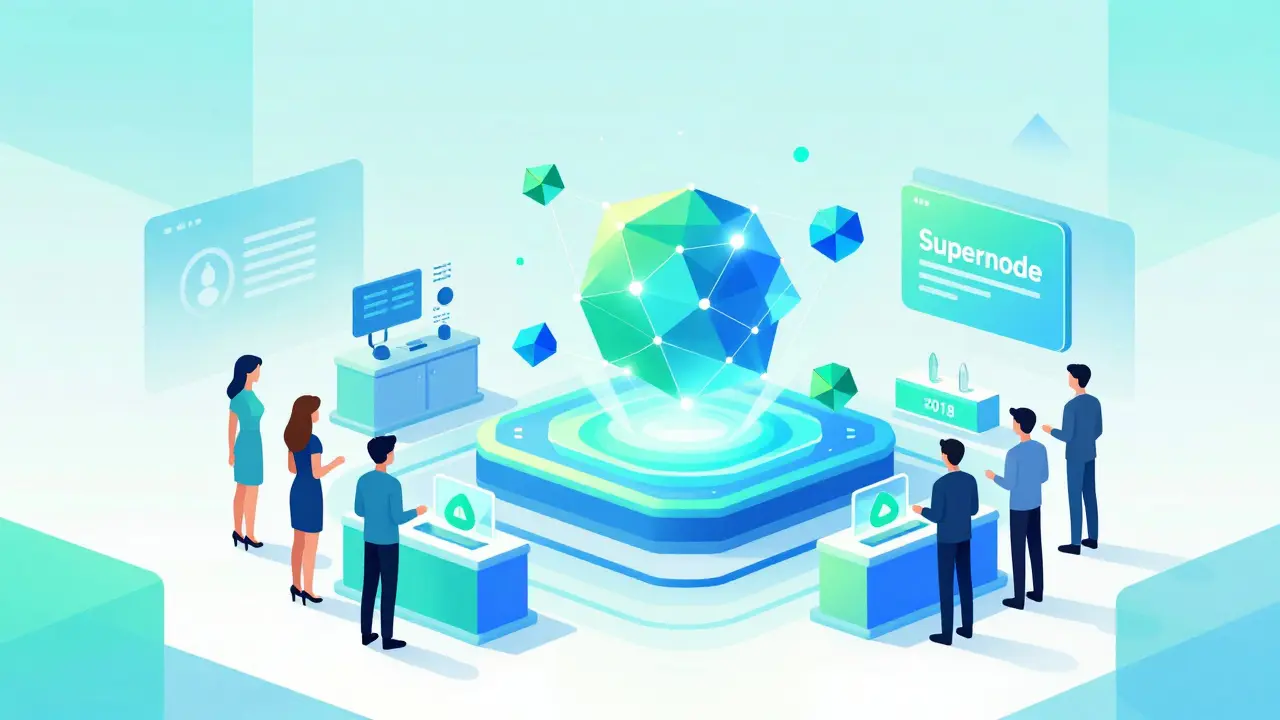
To understand where Bgogo stands today, we need to look at what made it special when it launched in July 2018. Most exchanges were top-down corporations. Bgogo tried something different. It introduced the concept of Supernodes.
A Supernode wasn’t just a VIP club. It was a governance role. Each Supernode holder got two major perks:
- Listing Power: They could vote to list new cryptocurrencies on the exchange. This was called "One Vote, One Listing." It meant the community decided which coins got traded, not just the executives.
- Revenue Share: If you nominated a coin to be listed, you earned 20% of the trading fees generated by that specific pair for life. That is a massive incentive to pick winners.
This model was designed to align the interests of the exchange with its users. It also included full transparency. Bgogo published the wallet positions of all Supernodes on their website. In an industry often criticized for hidden agendas, this was a bold move.
The BGG Token: A Deflationary Engine
The heart of the Bgogo ecosystem was the BGG token. Unlike many utility tokens that just sit there, BGG was designed to burn itself out of existence through usage. Here is how the mechanics worked:
- Negative Fees: When you traded, you paid a fee. But within 30 minutes, Bgogo sent you back BGG tokens worth 105% of that fee. Effectively, you were getting paid to trade.
- Daily Buybacks: The exchange committed to using 100% of its daily trading commissions to buy back BGG tokens from the open market.
- Burn Mechanism: These bought-back tokens were sent to a public burn address. Once burned, they were gone forever. This reduced supply, theoretically driving up the price for holders.
This created a powerful feedback loop. More trading meant more buybacks, which meant higher BGG prices, which attracted more traders. On paper, it was a brilliant economic model.
Credibility Factors: Who Backed It?
In the wild west of 2018 crypto launches, trust was hard to come by. Bgogo had some serious credentials to offset skepticism:
- Pantera Capital Investment: This is a big name. Pantera Capital is one of the most respected venture capital firms in blockchain. Their investment signaled that professional analysts saw potential in Bgogo’s tech and team.
- Experienced Leadership: CEO Zhang Yibo brought over 12 years of experience from asset management and private equity in Hong Kong and Mainland China. This isn’t your typical anonymous founder.
- Top-Tier Tech Team: The engineering staff reportedly came from giants like Google, Facebook, Twitter, and IBM. This suggested the platform could handle high-frequency trading without crashing.
These factors gave Bgogo a significant head start compared to countless other scams that popped up during that era.
The Current Reality Check (2026)
Here is where things get tricky. If you search for Bgogo today, you won’t find bustling forums or breaking news. You will mostly find archived articles from 2018 and 2019. Let’s look at the red flags and current status indicators.
| Metric | Status/Observation | Risk Level |
|---|---|---|
| Active Trading Volume | Extremely low or non-existent on major trackers | High |
| Recent Updates | No significant product updates since early 2020s | High |
| User Reviews | Lack of recent user feedback; mostly old complaints | Medium |
| Regulatory Compliance | Unclear; headquartered in China with global reach | High |
| App Availability | Android app via Aptoide; not on official Play Store | Medium |
The absence of recent news is concerning. In the crypto world, silence usually means trouble. Competitors like Binance, Coinbase, and Kraken are constantly updating features, adding coins, and dealing with regulatory scrutiny. Bgogo seems to have stepped off the stage.
If you try to check the price of BGG on platforms like CoinCarp, you might see data, but liquidity is likely thin. Thin liquidity means you can’t sell large amounts without crashing the price. It also makes the platform vulnerable to manipulation.
Security and User Experience Concerns
When an exchange goes quiet, security becomes a major worry. Even if the servers are running, who is maintaining them? Are there patches for new vulnerabilities? Without an active development team, the risk of hacks increases exponentially.
Furthermore, customer support channels listed online-like [email protected] no longer be monitored. Many former users report delays or total lack of response when trying to withdraw funds from dormant exchanges. If you have assets on Bgogo, your priority should be moving them to a personal hardware wallet immediately, if the withdrawal function still works.
Alternatives for Community Governance
If you liked the idea of Bgogo’s Supernode system, you are not alone. The concept of decentralized governance has evolved. Today, you don’t need a centralized exchange to participate in listing decisions. Look into:
- Decentralized Exchanges (DEXs): Platforms like Uniswap allow anyone to create a trading pool. Governance is handled by token holders voting on proposals.
- DAOs (Decentralized Autonomous Organizations): Many projects now use DAO structures where community members vote on treasury spending and development priorities directly.
These models offer similar community involvement but with much greater transparency and security because the code is open-source and auditable.
Final Verdict: Should You Use Bgogo?
Based on the available evidence as of May 2026, I cannot recommend Bgogo for active trading. The lack of volume, updates, and clear communication makes it too risky. Your funds could be stuck, or worse, lost due to security breaches.
If you hold BGG tokens, treat them as a speculative relic rather than a functional asset. Keep them in a secure private wallet, not on the exchange. For everyday trading, stick to established, regulated platforms with proven track records and active development teams.
Is Bgogo exchange still operational in 2026?
While the website may still load, there is little evidence of active trading volume or recent development. The platform appears to be largely dormant compared to its peak in 2018-2019. Users should exercise extreme caution.
Can I withdraw my funds from Bgogo?
Withdrawal functionality may still work for small amounts, but many users report difficulties with larger transactions or delayed processing. If you have assets on the platform, attempt to withdraw them to a personal wallet immediately.
What happened to the BGG token?
The BGG token is still listed on some tracking sites, but its value and liquidity have significantly decreased. The deflationary burn mechanism likely slowed down as trading volume dropped.
Was Bgogo a scam?
There is no definitive proof that Bgogo was a scam at launch. It had legitimate backing from Pantera Capital and a professional team. However, its failure to maintain operations and communicate with users has led to a poor reputation.
Are there better alternatives for community-driven trading?
Yes. Decentralized exchanges (DEXs) like Uniswap or PancakeSwap offer community governance through token voting. Additionally, many modern projects use DAOs for decision-making, providing more transparency than traditional exchanges.
Who owns Bgogo exchange?
Bgogo was founded and led by CEO Zhang Yibo. The company is headquartered in China. Strategic investment was provided by Pantera Capital, but ownership remains with the founding team and early investors.
How does the Supernode system work?
Supernodes were special roles held by users who owned a certain amount of BGG tokens. They could vote to list new coins on the exchange and received 20% of the trading fees from those listed coins as a reward.
Is Bgogo available on mobile devices?
Bgogo previously offered an Android app via Aptoide. However, given the platform's current status, the app may not be updated or secure. It is not available on the official Google Play Store.
Larry Port
May 6, 2026 AT 17:28It is fascinating to look back at the supernode model. The idea that users could vote on listings was revolutionary for its time, even if it did not survive the market shifts. I always thought the economic incentives were too good to be true. When you get paid to trade, something usually breaks in the long run. It reminds me of how early social media platforms tried to monetize attention directly. They promised empowerment but delivered complexity. Bgogo had the right vision but perhaps lacked the execution stamina. The Pantera backing should have given them more runway than they used. I wonder if the team burned out or if regulatory pressure forced their hand. Either way, it serves as a cautionary tale for new DeFi projects today.
Amit Varpe
May 7, 2026 AT 19:10Another dead exchange from the wild west era :)
Bronwen Butler
May 8, 2026 AT 02:16You are all wrong about this being a failure. The silence means they are building something bigger in stealth mode. Look at how Binance operated before they went public with features. Bgogo is just waiting for the right moment to strike again. You people are so quick to judge based on lack of marketing. Real innovators do not need constant press releases. They let the product speak for itself. And right now the product is speaking volumes about efficiency by not wasting resources on hype.
Jocelyn Garcia
May 8, 2026 AT 05:11The liquidity metrics are the real killer here. Thin order books make any trading strategy impossible without slippage destroying your edge. I checked CoinCarp and the spread is wider than my patience. Without active market makers, the burn mechanism becomes irrelevant because there is no volume to trigger the buybacks. It is a ghost town. The tech stack might have been solid with Google engineers but code does not pay bills when users leave. The supernode governance was cool in theory but practically it led to listing wars that alienated retail traders. Now it is just a relic.
Michelle Bonahoom
May 9, 2026 AT 20:34i dont trust chinese exchanges anymore after what happened with other platforms. keep your money away from these places unless you want it gone forever. they say one thing and do another. typical story. stay safe folks
Matt Davis
May 10, 2026 AT 01:42This article is completely missing the point of why centralized exchanges fail. It is not about the technology or the tokenomics. It is about the inherent conflict of interest between the platform and the user. Bgogo failed because it tried to solve a problem that only decentralized protocols can truly address. The supernode system was a band-aid on a bullet wound. You cannot have community governance on a centralized server owned by a CEO in Hong Kong. It is an oxymoron. The entire premise was flawed from day one. Anyone who invested based on the 'community' promise was naive.
Zara Zaman
May 10, 2026 AT 15:50I actually held some BGG tokens back in the day and I am still trying to figure out if I can withdraw. The support email bounces every time I try to send a ticket. It feels like they are hiding. I know exactly where you live Zhang Yibo and if you think you can just disappear with user funds you are mistaken. We will find you. This is unacceptable behavior for a company that claimed to be transparent. You owe us answers and you owe us our money. Do not test me.
Albert Lee
May 10, 2026 AT 22:26I feel for everyone stuck on these old platforms. It is incredibly stressful to watch your assets sit there while the world moves on. Please remember that your mental health is more important than a few lost tokens. Take a breath and focus on what you can control today. There are so many wonderful opportunities in the current crypto space that do not carry this level of risk. Let go of the past and embrace the future with open arms. You deserve peace of mind.
Pauline Larocco71
May 11, 2026 AT 13:07its sad to see such potential wasted. i remember when the app first launched and everyone was excited about the negative fees. it felt like magic. now it feels like a bad dream. i hope the developers are doing well somewhere else maybe working on better projects. we shouldnt hate them for trying something new even if it didnt work out. innovation requires failure sometimes. lets learn from this and move forward together.
beti macedo
May 13, 2026 AT 06:54Dear readers, it is imperative to understand the historical context of such ventures. While the outcome appears unfavorable, the attempt to democratize financial access through innovative governance structures deserves academic recognition. One must not dismiss the efforts of pioneers solely based on current operational status. The lessons learned from Bgogo’s trajectory are invaluable for future fintech developments. We should encourage resilience and continuous improvement in the sector rather than engaging in destructive criticism. Thank you for sharing this comprehensive review.
Ankush Pokarana
May 13, 2026 AT 07:26the concept of burning tokens to increase scarcity is fundamentally sound but it relies entirely on sustained demand which was never present in the broader market for niche exchanges. when the hype cycle ended the value proposition collapsed under its own weight. this is a classic example of misaligned incentives where short term gains overshadowed long term sustainability. the engineering talent was wasted on a business model that could not adapt to regulatory realities. we must consider how decentralization offers a more robust path forward for similar initiatives in the future.