Bangladesh Crypto Risk Assessment Tool
Understanding Your Risk
Based on Bangladesh's current enforcement policies, your crypto activities could result in serious legal consequences. This tool helps you assess potential risks based on your specific usage patterns.
Since 2014, Bangladesh has taken one of the toughest stances on cryptocurrency in Asia-not because it passed a law banning crypto, but because it never allowed it to exist in the first place. The Bangladesh Bank didn’t wait for legislation. It issued warnings. Then more warnings. By 2017, it declared cryptocurrency illegal under existing financial laws. Today, in 2025, that stance hasn’t softened. If you’re mining Bitcoin in Dhaka, trading Ethereum through a TRC20 wallet, or holding crypto as an investment, you’re operating in a legal gray zone that can land you in jail.
How Bangladesh Banned Crypto Without a Law
There’s no specific law in Bangladesh that says, "Crypto is illegal." Instead, the government uses older rules to shut it down. The Foreign Exchange Regulations Act of 1947 makes it illegal to send money abroad without approval. The Anti-Money Laundering Act of 2012 gives authorities power to investigate suspicious financial flows. And the Information and Communication Technology (ICT) Act criminalizes digital activities that threaten national security or financial stability.The Bangladesh Bank-the country’s central bank-has used these laws to say: any use of cryptocurrency violates financial rules. That includes buying, selling, trading, holding, or mining. They don’t need a new law because they already have tools to punish financial crimes. And they’re not shy about using them.
Who’s Watching? The Enforcement Machine
Three agencies are in charge of making sure crypto stays underground:- Bangladesh Bank: Issues warnings, instructs banks not to process crypto-related transactions, and tells law enforcement where to look.
- Financial Intelligence Unit (FIU): Tracks suspicious money movements. If someone sends $10,000 in crypto to an overseas wallet, the FIU flags it.
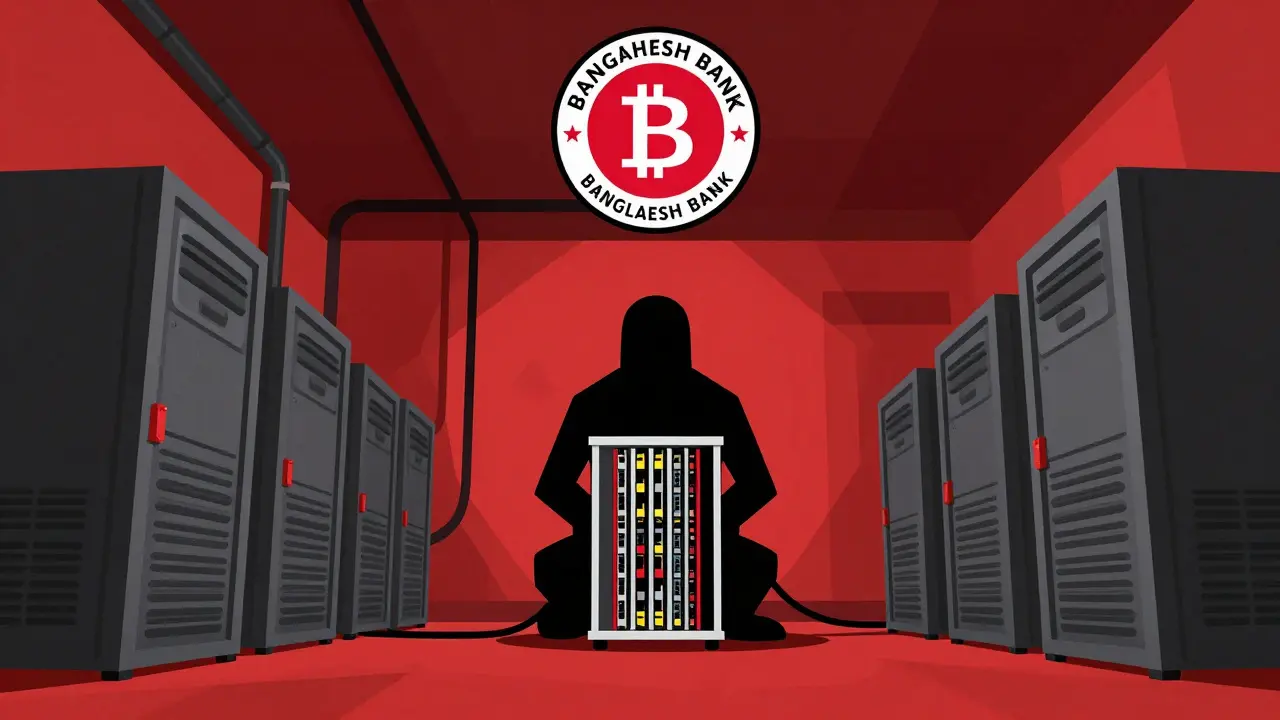
- Criminal Investigation Department (CID): Makes arrests. In 2024, at least five people in Dhaka were jailed for running hidden crypto mining rigs. Authorities found servers in basements, warehouses, even residential apartments-all running 24/7, consuming massive power.
The CID doesn’t arrest people just for owning crypto. They arrest them for violating anti-money laundering laws. If your crypto was used to move money from a scam, or to pay for illegal goods, or to bypass currency controls, you’re the target. The Bangladesh Bank made this clear: ownership isn’t illegal. But using it to launder money? That’s a prison sentence.
Crypto Mining? It’s a Crime
Mining crypto in Bangladesh isn’t just discouraged-it’s criminal. The government sees it as a direct threat to the national power grid and financial control. Electricity subsidies are meant for homes and businesses, not for machines running nonstop to generate Bitcoin.In 2024, authorities raided five mining operations in Dhaka and Chittagong. One operation had 170 ASIC miners running in a single apartment. The power bill? Over 12,000 kWh per month-enough to power 10 average households. The miners claimed they were "just experimenting." The court didn’t buy it. They were charged under the Anti-Money Laundering Act and the ICT Act. One miner got 18 months in prison.
Compare that to Pakistan, which in May 2025 launched the Pakistan Digital Assets Authority and allocated 2,000 megawatts of electricity for Bitcoin mining. Bangladesh is going the opposite direction: stricter, tighter, and more punitive.

Why the Fear of Crypto?
Bangladesh’s government isn’t against technology. In 2020, it released the National Blockchain Strategy, promoting blockchain for land records, digital IDs, and public services. So why ban crypto but allow blockchain?The answer is control. Blockchain for government use means centralized oversight-data is tracked, audited, and managed by state agencies. Crypto, on the other hand, is decentralized. No one controls it. No one can freeze a wallet. No one can trace every transaction perfectly.
That’s the real fear. Cryptocurrency enables anonymous transfers. TRC20 wallets can be created in seconds. No KYC. No ID. No paper trail. And Bangladesh has seen the damage crypto scams can do. The MTFE scam in 2021 tricked over 10,000 people into investing $20 million in a fake crypto platform. It vanished overnight. Victims lost life savings. The government didn’t want a repeat.
So they chose to shut it down entirely-even if that means punishing innocent users who just wanted to buy Bitcoin as an investment.
The Tax Question: No Rules, No Clarity
There’s no crypto tax law in Bangladesh. But that doesn’t mean you’re off the hook.The National Board of Revenue (NBR) applies the Income Tax Ordinance of 1984 to all income, regardless of form. If you sell crypto for profit, that profit is taxable. If you earn crypto as payment for work, it’s income. But there’s no system to track it. No reporting requirement. No form to fill out.
This creates a dangerous gap. People don’t report crypto gains because they can’t. Authorities don’t audit them because they can’t easily trace the transactions. But if you’re caught using crypto for money laundering, the NBR can still come after you for unreported income.
International Pressure Is Building
Bangladesh is not following Financial Action Task Force (FATF) guidelines. FATF’s Recommendation 15 says countries must regulate virtual asset service providers-exchanges, wallets, custodians-with licensing, monitoring, and reporting rules.Bangladesh does none of that. It doesn’t license anyone. It doesn’t monitor wallets. It doesn’t require reporting. That puts Bangladesh at odds with global financial standards. International banks are wary of dealing with Bangladeshi institutions because they can’t verify if crypto money is flowing through.
Neighboring countries are moving forward. India has a 30% crypto tax and reporting rules. Sri Lanka has licensed exchanges. Pakistan has a national crypto reserve. Bangladesh is falling behind-not because it’s anti-tech, but because it’s anti-risk. And in a world where digital finance is growing fast, that isolation could hurt its economy long-term.

People Are Still Using Crypto-Secretly
Despite the risks, crypto use hasn’t disappeared. It’s gone underground.People trade through peer-to-peer apps like LocalBitcoins and Paxful. They use P2P transfers via mobile money platforms like bKash and Nagad, disguising crypto payments as "gifts" or "remittances." Some buy USDT (Tether) on international exchanges and send it to TRC20 wallets, then cash out through local agents who accept cash in exchange for crypto.
There’s no official data on how many people do this. But estimates from local fintech analysts suggest 500,000 to 800,000 Bangladeshis hold crypto. Most are young, urban, tech-savvy, and frustrated by slow banking and currency controls.
The government knows. But cracking down on millions of individuals isn’t feasible. So they focus on the big fish: miners, large-scale traders, and those linked to scams or cross-border crime.
What Happens If You Get Caught?
If you’re caught with crypto in Bangladesh, here’s what you might face:- Seizure of devices: computers, mining rigs, phones
- Freezing of bank accounts linked to crypto transactions
- Interrogation by CID or FIU
- Charges under the Anti-Money Laundering Act or ICT Act
- Jail time: up to 7 years for serious violations
There’s no fine system. No warning letter. No first-time offense exception. If you’re caught, you’re treated like a financial criminal.
What’s Next for Bangladesh?
The Ministry of Finance has the power to introduce new crypto laws. But so far, they’ve chosen silence. The Bangladesh Bank keeps issuing warnings. The CID keeps making arrests. The public keeps using crypto.There’s a growing voice inside Bangladesh’s tech community asking: Why block blockchain but allow it in government? Why ban crypto when mobile money revolutionized financial inclusion? Why risk isolating a generation of digital natives?
The answer may come from pressure-not from within, but from outside. As global financial institutions demand FATF compliance, Bangladesh may have no choice but to create a regulated framework. But until then, the message is clear: crypto is not welcome. And the consequences are real.
Is it illegal to own cryptocurrency in Bangladesh?
No, simply owning cryptocurrency isn’t explicitly illegal. But the Bangladesh Bank states that crypto has no legal status, and using it for any transaction-buying, selling, trading, or mining-violates existing financial laws. Authorities don’t arrest people just for holding crypto, but if they link it to money laundering, foreign exchange violations, or scams, you can be prosecuted.
Can you get jailed for mining Bitcoin in Bangladesh?
Yes. In 2024, multiple individuals were arrested and sentenced to prison for running crypto mining operations. Authorities treat mining as a violation of anti-money laundering laws and the ICT Act, especially when it involves high electricity use or unreported income. Jail terms of up to 7 years are possible for serious cases.
Are there any licensed crypto exchanges in Bangladesh?
No. Bangladesh has no licensed cryptocurrency exchanges, wallets, or service providers. All platforms operating in the country do so illegally. Banks are instructed to block any transactions linked to crypto exchanges. Using international platforms like Binance or Coinbase is risky and can trigger investigations by the Financial Intelligence Unit.
Is cryptocurrency taxed in Bangladesh?
There is no specific crypto tax law. However, the National Board of Revenue can apply the Income Tax Ordinance of 1984 to crypto profits. If you earn income from selling crypto, that income is taxable. But since there’s no reporting system, most people don’t declare it-making them vulnerable if they’re later investigated for money laundering.
Why does Bangladesh allow blockchain but ban crypto?
The government supports blockchain for public services like land records and digital IDs because it’s centralized and controllable. Crypto, however, is decentralized and anonymous-making it impossible for authorities to track or regulate. The state wants the benefits of the technology without losing control over money flows.
How does Bangladesh’s crypto policy compare to Pakistan’s?
Pakistan took the opposite path. In May 2025, it created the Pakistan Digital Assets Authority to regulate exchanges and allocated 2,000 megawatts of power for Bitcoin mining. It even formed a National Crypto Committee and plans a Bitcoin Strategic Reserve. Bangladesh, by contrast, bans mining, blocks exchanges, and jails operators. Pakistan is integrating crypto into its economy; Bangladesh is trying to erase it.
Can you send crypto from Bangladesh to another country?
Sending crypto abroad violates the Foreign Exchange Regulations Act of 1947. Even if you use peer-to-peer platforms or anonymous wallets, authorities can trace large transfers through bank connections or digital footprints. Doing so risks criminal charges for unauthorized foreign currency transfers and money laundering.
Is it safe to use crypto in Bangladesh for remittances?
No. While some use crypto to send money home faster and cheaper than traditional remittance services, it’s extremely risky. The Bangladesh Bank and FIU monitor cross-border digital transfers. If flagged, your bank account could be frozen, and you could be investigated. The legal risk far outweighs any speed or cost benefit.
Tom Van bergen
December 6, 2025 AT 03:23Fun fact: China bans crypto too. And they're the ones building the digital yuan. Coincidence? I think not.
Sandra Lee Beagan
December 6, 2025 AT 21:59It's not about money-it's about dignity. The fact that blockchain is allowed for government use but not for people? That's the real betrayal.
Ben VanDyk
December 7, 2025 AT 19:45Also, mining rigs in apartments? Yeah, that's dumb. But arresting people for owning crypto? That's just lazy governance.
michael cuevas
December 9, 2025 AT 02:26Meanwhile, 800k people are using crypto because the banking system is a joke.
Guess who's the real criminal here?
Nina Meretoile
December 10, 2025 AT 02:15The government fears decentralization because it can't control it. But that's the whole point. Freedom isn't always neat. And it's not always legal. But it's still right.
Barb Pooley
December 11, 2025 AT 06:13They let India and Pakistan do crypto because they're pawns. Bangladesh? They're the one they're trying to break.
Just wait - the next thing they'll ban is WhatsApp. Or Wi-Fi.
Shane Budge
December 13, 2025 AT 03:20Adam Bosworth
December 14, 2025 AT 08:12They arrested 5 miners? Bro, they arrested 5 people who were dumb enough to leave their rigs in an apartment. The smart ones? They're in Dubai.
And the government? They're still pretending they're in charge. Pathetic.
Uzoma Jenfrancis
December 15, 2025 AT 14:57We have our own problems: inflation, poverty, corruption. Why invite more chaos?
Let the Americans play with their digital toys. We will build real solutions. Not fantasy money.
Renelle Wilson
December 15, 2025 AT 18:51This is not a policy. It is a cognitive dissonance of governance. The state wants the benefits of distributed ledger technology without surrendering the centralized authority that underpins its legitimacy.
The irony is that by suppressing crypto, it is not protecting its citizens - it is denying them access to a global financial architecture that could, if regulated, empower the unbanked, reduce remittance costs, and foster innovation.
The fear of anonymity is not a justification for prohibition - it is a failure of regulatory imagination.
Elizabeth Miranda
December 16, 2025 AT 07:25People are risking jail just to send money home faster or save their earnings.
And the government’s solution? More jail. More fear.
What if they just… regulated it? Like they did with mobile money? That worked. Why not this?
Chloe Hayslett
December 17, 2025 AT 03:18Meanwhile, the rich are buying USDT through brokers and laughing all the way to Singapore.
But the guy in Dhaka who mined 2 BTC in his basement? He gets 7 years. Classic.
Jonathan Sundqvist
December 19, 2025 AT 01:26Let the rich play with crypto. The rest of us need food, power, and clean water.
Stop pretending this is about justice. It's about control. And control is what keeps this country from collapsing.
Thomas Downey
December 19, 2025 AT 12:01The use of 1947 legislation to suppress 21st-century innovation is not merely regressive - it is an affront to the principles of progress, liberty, and individual economic sovereignty.
One cannot claim to be a modern state while enforcing digital prohibitionism with the zeal of a medieval inquisitor.
The Bangladesh Bank’s conduct, while legally expedient, is morally indefensible.
And to imprison citizens for the mere act of holding digital assets? This is not governance. It is tyranny cloaked in regulatory language.
Annette LeRoux
December 21, 2025 AT 10:08They're scared of what happens when people realize they don't need permission to own value.
And honestly? That's kind of beautiful. 💫