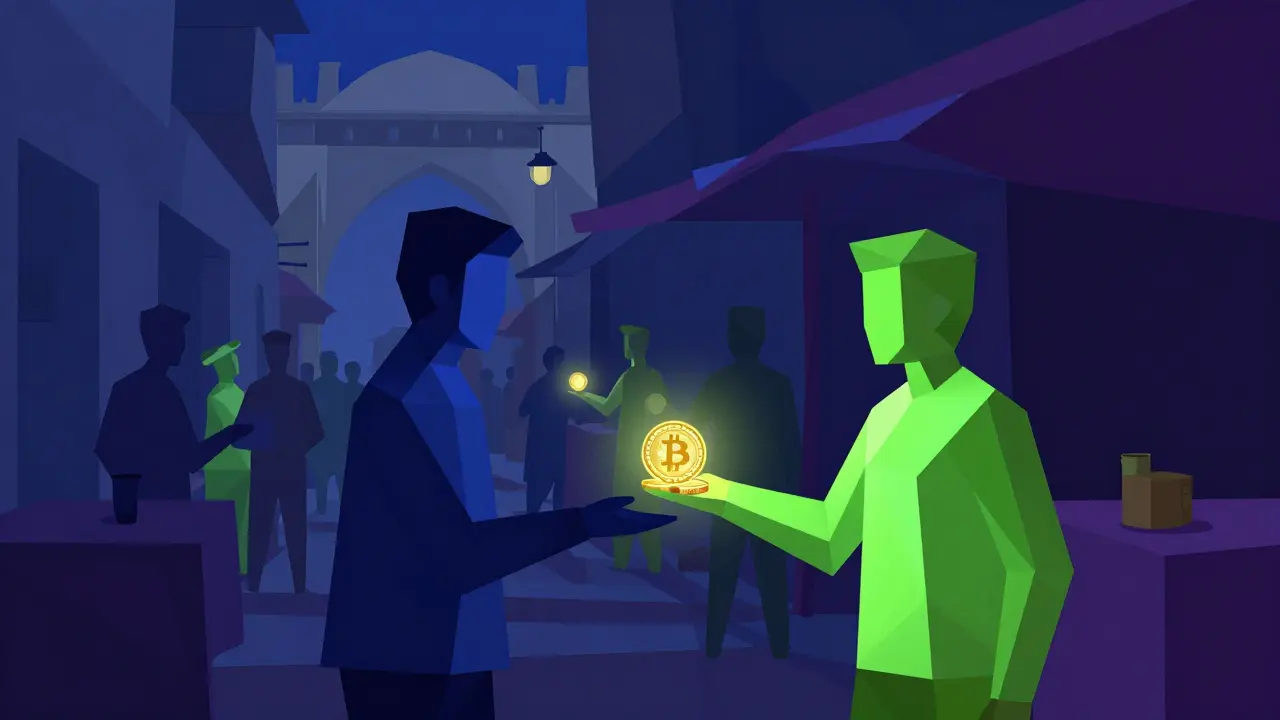
Imagine holding an asset that could double in value overnight, but using it might land you in prison. That is the reality for millions of Egyptians who navigate a complex underground market for cryptocurrency. Recent reports suggest there are up to 3 million crypto holders in Egypt, a staggering number given that the country maintains one of the strictest bans on digital assets in the world. How does such a massive user base exist when the law says it shouldn't?
The figure of 3 million users is not just a random guess; it reflects the deep-seated demand for alternative financial tools in a nation grappling with economic volatility. While the government clamps down hard, the people find ways around it. This article breaks down why the ban exists, how people actually trade despite the risks, and what this means for the future of finance in North Africa.
The Legal Wall: Why Egypt Banned Crypto
To understand the black market, you first have to look at the law. In 2020, Egypt passed Law No. 194 of 2020, which regulates the Central Bank and Banking System. Specifically, Article 206 of this law acts as a total blockade. It prohibits individuals, banks, and financial institutions from dealing in cryptocurrencies without prior approval from the Central Bank of Egypt (CBE).
This isn't a vague guideline. It is a categorical prohibition. Egypt joins a small club of countries like Afghanistan, Bangladesh, and China that have implemented complete Bitcoin bans. The CBE’s stance is driven by three main fears:
- Financial Stability: Cryptocurrencies are highly volatile. The CBE worries that widespread adoption could destabilize the Egyptian Pound and disrupt monetary policy.
- Illicit Activities: Regulators cite concerns about money laundering, terrorism financing, and fraud enabled by decentralized networks.
- Lack of Control: Because no central authority issues or backs these assets, the state cannot regulate them effectively.
The penalties for breaking these rules are severe. Violators face imprisonment and fines ranging from EGP 1 million to EGP 10 million (approximately $32,000 to $320,000 USD). These numbers are designed to be deterrents, signaling that the state views crypto trading as a serious threat to national financial security.
How 3 Million People Trade Underground
If the law is so strict, where do these 3 million users come from? The answer lies in necessity and innovation. When formal channels are closed, informal ones open wide. Most Egyptians do not use major centralized exchanges like Binance or Coinbase because those platforms often block users from restricted jurisdictions or require identity verification that exposes them to legal risk.
Instead, the market relies on peer-to-peer (P2P) transactions and local intermediaries. Here is how the ecosystem works on the ground:
- P2P Platforms: Users connect directly with each other through platforms that facilitate trades without holding funds. One person sends cash via bank transfer or mobile wallet, and the other releases crypto.
- Local Exchanges & Telegram Groups: Small, unregulated operators run shops or online groups where they buy and sell Bitcoin and USDT (Tether) at a premium. They act as trusted middlemen in communities where trust is scarce.
- Crypto ATMs: While rare and risky due to surveillance, some machines allow cash-for-crypto swaps without extensive ID checks.
The most popular asset among these users is not Bitcoin, but stablecoins like USDT. Why? Because Egyptians are not just speculating; they are trying to preserve their savings. With inflation rates soaring and the currency depreciating, holding USDT offers a hedge against losing purchasing power. For many, crypto is not an investment strategy; it is a survival tool.
The Enforcement Challenge
Enforcing a ban on something as intangible as code is incredibly difficult. The Egyptian government faces the same problem as other banning nations: you can ban the banks, but you cannot easily ban the internet. Blockchain technology is decentralized by design. There is no server in Cairo to shut down.
However, authorities do try. The National Telecom Regulatory Authority (NTRA) has occasionally blocked access to known crypto exchange websites. Banks are instructed to freeze accounts if they detect suspicious transactions linked to crypto activities. But these measures are blunt instruments. Blocking a website URL is easy until users switch to a new domain or use a VPN. Freezing accounts requires detecting patterns, which becomes harder as P2P trades become more fragmented and smaller in size.
The clandestine nature of this market means accurate data is impossible to verify. The "3 million" figure likely comes from aggregated estimates of active wallets, social media engagement, and transaction volume on P2P platforms. It is a shadow economy, invisible to official statistics but very real in daily life.
| Country | Legal Status | Key Regulatory Body | Penalties |
|---|---|---|---|
| Egypt | Complete Ban | Central Bank of Egypt | Imprisonment + Fines up to EGP 10M |
| Algeria | Complete Ban | Bank of Algeria | Punishable under existing laws |
| Morocco | Restricted/Illegal Transactions | Bank Al-Maghrib | Fines and penalties |
| Tunisia | Banned | Central Bank of Tunisia | Fines and imprisonment |
Signs of Change: Is the Ban Softening?
Despite the harsh rhetoric, the winds may be shifting. The sheer scale of adoption-millions of citizens risking jail time-makes enforcement unsustainable. Furthermore, the global trend is moving toward regulation, not prohibition. Countries like Nigeria and Kenya have moved from bans to regulated frameworks, seeing tax revenue and innovation benefits.
Reports in 2025 and early 2026 indicated that Egypt is considering legislation that would allow the Central Bank to issue licenses for cryptocurrency companies. This would mark a historic pivot from "total ban" to "regulated allowance." If true, this suggests the government recognizes that it cannot stop the tide, so it might as well build a dam.
A regulated framework could bring several benefits:
- Tax Revenue: Bringing crypto into the light allows the state to tax capital gains and transaction fees.
- Consumer Protection: Licensed exchanges would need to follow anti-money laundering (AML) rules, reducing scams.
- Remittances: Egyptians living abroad send billions back home. Crypto offers a faster, cheaper way to move money than traditional banks.
However, no specific timeline has been set. The CBE remains cautious, emphasizing that any change must protect the stability of the Egyptian Pound. Until then, the 3 million holders remain in a legal gray zone, operating in the shadows.

Risks for the Average User
For anyone considering entering this market in Egypt, the risks are substantial. Unlike in regulated markets where your deposits are insured, here you are entirely on your own.
Scams are rampant. Because there is no oversight, fraudulent schemes thrive. Fake exchanges, phishing sites, and Ponzi schemes target inexperienced users. Without a regulatory body to complain to, victims rarely recover their funds.
Bank account freezes. If a bank suspects your account is used for crypto trading, they can freeze your funds indefinitely while investigating. This can leave you unable to pay rent or buy groceries.
Price volatility. Even if you avoid legal trouble, the asset itself can crash. Losing 50% of your savings in a week is a common experience in crypto, and in Egypt, there is no safety net.
The Future of Digital Assets in Egypt
The story of crypto in Egypt is a clash between tradition and technology. The government wants control; the people want freedom and financial security. As long as economic pressures persist, the demand for digital assets will outpace the ability of the state to suppress them.
We may see a gradual evolution rather than a sudden revolution. Perhaps small-scale P2P trading will continue to be tolerated while large-scale institutional trading remains banned. Or maybe Egypt will join the ranks of nations that license crypto firms, turning a black market into a taxable industry.
Until that day comes, the 3 million holders will keep trading, hiding their wallets, and hoping for a better financial future. Their resilience shows that when people need a solution, they will find it-even if the law says they shouldn't.
Is it illegal to own Bitcoin in Egypt?
Yes. Under Law No. 194 of 2020, specifically Article 206, owning, trading, or promoting cryptocurrencies is prohibited unless approved by the Central Bank of Egypt. Penalties include heavy fines and imprisonment.
Why do Egyptians use crypto if it's banned?
Many Egyptians use crypto, particularly stablecoins like USDT, to protect their savings from high inflation and currency devaluation. It serves as a hedge against the loss of purchasing power in the Egyptian Pound.
Can I use Binance in Egypt?
Binance and other major exchanges typically restrict services to users in Egypt due to the legal ban. Attempting to use them via VPN carries significant legal and financial risks, including account closure and fund seizure.
What are the penalties for crypto trading in Egypt?
Violators can face imprisonment and fines ranging from EGP 1 million to EGP 10 million. Banks may also freeze accounts associated with suspicious crypto-related transactions.
Is Egypt planning to legalize cryptocurrency?
There are reports that Egypt is considering legislation to allow licensed cryptocurrency operations. However, as of mid-2026, no official legalization has occurred, and the current ban remains in effect.
How do people buy crypto in Egypt safely?
Most users rely on Peer-to-Peer (P2P) platforms or trusted local intermediaries. However, "safe" is relative; all methods carry legal risks and potential for scams due to the lack of regulatory oversight.
Jay Sharma
June 27, 2026 AT 20:31They tell you it's about financial stability, but let's be real for a second. It's always about control. The Central Bank knows that if people can move money without their permission, the whole power structure crumbles. That's why they ban it. They don't want you to have freedom; they want you dependent on their failing currency. Wake up sheeple.
Scott Miller
June 28, 2026 AT 20:16You guys are sleeping on this opportunity! Egypt is just like early days of Bitcoin in other countries-strict bans create massive underground demand which eventually forces legalization. When they finally crack and allow licensed exchanges, the price will moon because all those millions of users will flood in legally. Get your USDT ready now while everyone else is scared. This is generational wealth waiting to happen!
Abby Martin
June 29, 2026 AT 16:40Oh please, spare me the 'generational wealth' nonsense. You're ignoring the human cost here. These aren't just numbers; these are families losing their life savings to scams because there's no recourse. It's morally bankrupt to encourage illegal activity that preys on vulnerable populations trying to survive inflation. The government might be heavy-handed, but enabling a black market where fraud thrives is equally reprehensible. We need regulation, not cowboy capitalism.
Mélanie Boulay
June 30, 2026 AT 17:33I think we need to look at this from a slightly different perspective, one that respects the boundaries of legal systems while acknowledging the genuine economic distress driving this behavior. While I understand the frustration with the Egyptian Pound's devaluation, participating in an unregulated market introduces risks that extend beyond personal financial loss, potentially destabilizing the broader community trust networks that already exist within these tight-knit social circles. It is important to consider that when individuals operate outside the law, they are not only risking their own assets but also eroding the collective sense of security that relies on predictable, albeit imperfect, institutional frameworks. Perhaps the solution lies not in immediate deregulation, but in creating educational programs that help citizens navigate the current restrictions safely until such time as legislative changes can be properly debated and implemented by the relevant authorities.
Maurice Flynn
July 2, 2026 AT 10:03It’s funny how history repeats itself. Governments have always tried to control money, from gold to paper to digital. But the tide of technology is strong. People will find a way. Just stay chill and watch the world change. :)
nancy jarecki
July 3, 2026 AT 14:42The semantic drift in this discourse is pathetic. You’re conflating 'financial sovereignty' with 'criminal enterprise.' The CBE’s prohibition isn’t merely bureaucratic inertia; it’s a rational response to the systemic risk posed by unbacked volatile assets in a fragile macroeconomic environment. Your naive enthusiasm for P2P arbitrage ignores the sophisticated AML/KYC frameworks that actually prevent state collapse. Keep playing with your toys while the rest of us deal with reality.
Robert Hundley
July 4, 2026 AT 19:50Haha, nancy jarecki, calm down buddy! Everyone has a right to protect their savings. If the system is broken, people fix it themselves. That's just how it goes. Stay positive! :)
Melissa L
July 6, 2026 AT 16:55i mean its kinda crazy how many ppl are doing it tho. my cousin in cairo says he uses telegram groups all the time. seems risky but hey better than watching his money lose value right? i dont get crypto but i see why they do it.
Rob Morton
July 6, 2026 AT 23:46What fascinates me is the psychological shift required to participate in this economy. It’s not just about finance; it’s about trust. In a vacuum of institutional reliability, trust becomes the primary currency. How does one cultivate trust in a decentralized network when every transaction carries the weight of potential imprisonment? It suggests a profound resilience in the human spirit, or perhaps a deep-seated distrust of authority that transcends borders. What do you think drives that decision?
Routh Middaugh
July 7, 2026 AT 01:25I suppose both sides have valid points... The government needs to maintain order, yes? But the people need to eat, too! It’s a delicate balance, isn’t it? Maybe if we could find a middle ground where innovation is encouraged but safety is prioritized, we’d see less friction. Who knows? Perhaps in another decade, this will seem like a quaint historical footnote. Let’s hope for peace and prosperity for everyone involved!!
Ryan Peters
July 8, 2026 AT 11:11Typical Western ignorance. You think you can just export your 'freedom' narrative to sovereign nations without understanding their geopolitical realities? Egypt isn't some sandbox for your libertarian fantasies. Their central bank is protecting national sovereignty from foreign capital flight and speculative attacks. If you can't grasp the difference between a regulated financial system and a chaotic free-for-all, maybe stick to commenting on cat videos instead of international monetary policy.
ross harris
July 8, 2026 AT 15:17The irony is deliciously thick here. The state claims to protect the people from the 'chaos' of crypto, yet their own economic policies have created a chaos so severe that citizens willingly embrace the very risks they’re warned against. It’s a Kafkaesque dance where the jailer blames the prisoner for trying to escape the burning building. The real scam isn't the Ponzi schemes; it's the illusion of stability sold by the powers that be.