Crypto Crime Reporting Calculator
Understanding the Data Gap
The article shows why crypto crime numbers differ: TRM Labs tracks only fraud ($10.7B), while Chainalysis includes all illicit activity ($40.9B+). This calculator demonstrates how reporting methodologies affect the final numbers.
$0.0B
$0.0B
$0.0B
What the Numbers Mean
TRM Labs Method: Counts only fraud (scams, phishing, rug pulls). Shows declining fraud but misses complex criminal activity.
Chainalysis Method: Includes darknet markets, ransomware, money laundering, and terrorist financing. Shows the full scope of illicit activity that grows over time.
TRON Impact: The T3 Financial Crime Unit's efforts reduced TRON's share from 70% to 58%, cutting $6B in illicit volume.
Crypto enforcement is getting real - and the numbers tell a story no one expected
In 2024, the world didn’t shut down crypto. It started to track it. Law enforcement agencies, blockchain analysts, and private firms teamed up in ways no one thought possible just five years ago. The result? A dramatic shift in how crypto crime is measured, caught, and stopped - but the data doesn’t all agree.
One report says illicit crypto activity dropped to $10.7 billion. Another says it jumped to $40.9 billion. Which one’s right? The answer isn’t about who’s lying - it’s about what they’re counting.
Why two reports show wildly different crypto crime numbers
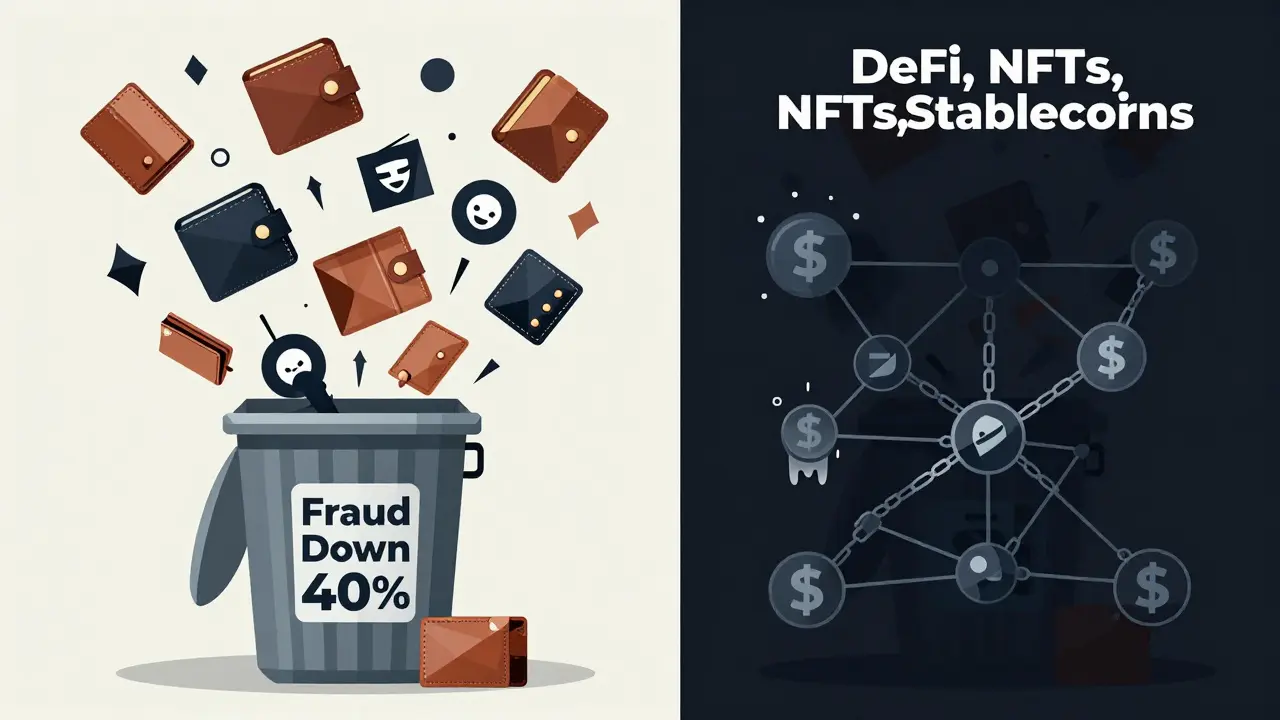
TRM Labs and Chainalysis both study crypto crime, but they’re looking at different things. TRM focused only on fraud - scams, fake exchanges, phishing, and rug pulls. In 2024, those totaled $10.7 billion. That’s down 40% from 2023. It’s a clear sign that basic scams are getting harder to pull off. More users know the signs. More platforms block suspicious wallets. More victims report quickly.
Chainalysis, on the other hand, counts everything: darknet markets, ransomware payments, money laundering, and terrorist financing. Their 2024 estimate? $40.9 billion. But here’s the catch - their numbers always grow after the initial report. Last year’s $24.2 billion became $46.1 billion once they dug deeper. They expect 2024’s number to hit $51 billion by early 2026. Why? Because identifying illicit addresses takes time. It’s not a snapshot. It’s a slow-motion investigation.
The real takeaway? Fraud is declining. But sophisticated, hidden criminal networks are still moving billions. One trend is shrinking. The other is just becoming visible.
TRON dominates crypto crime - and then it changed everything
In 2023, TRON was the wild west of crypto crime. It hosted 70% of all illicit activity. Why? Low fees, fast transactions, and a flood of USDT - Tether’s stablecoin - flowing through it. Criminals loved it.
Then, in August 2024, everything shifted. TRON, Tether, and TRM Labs formed the T3 Financial Crime Unit - a first-of-its-kind public-private task force. Their mission: freeze stolen funds and return them. Within months, they froze over $130 million. They traced $20% of blocklisted USDT on TRON and sent it back to victims or government accounts. TRON’s share of illicit volume dropped from 70% to 58% - and the total dollar amount fell by $6 billion.
This wasn’t luck. It was coordination. TRON gave access to its blockchain data. Tether froze tokens tied to known bad actors. TRM Labs provided the forensic tools. Law enforcement got real-time alerts. It’s the model that works.
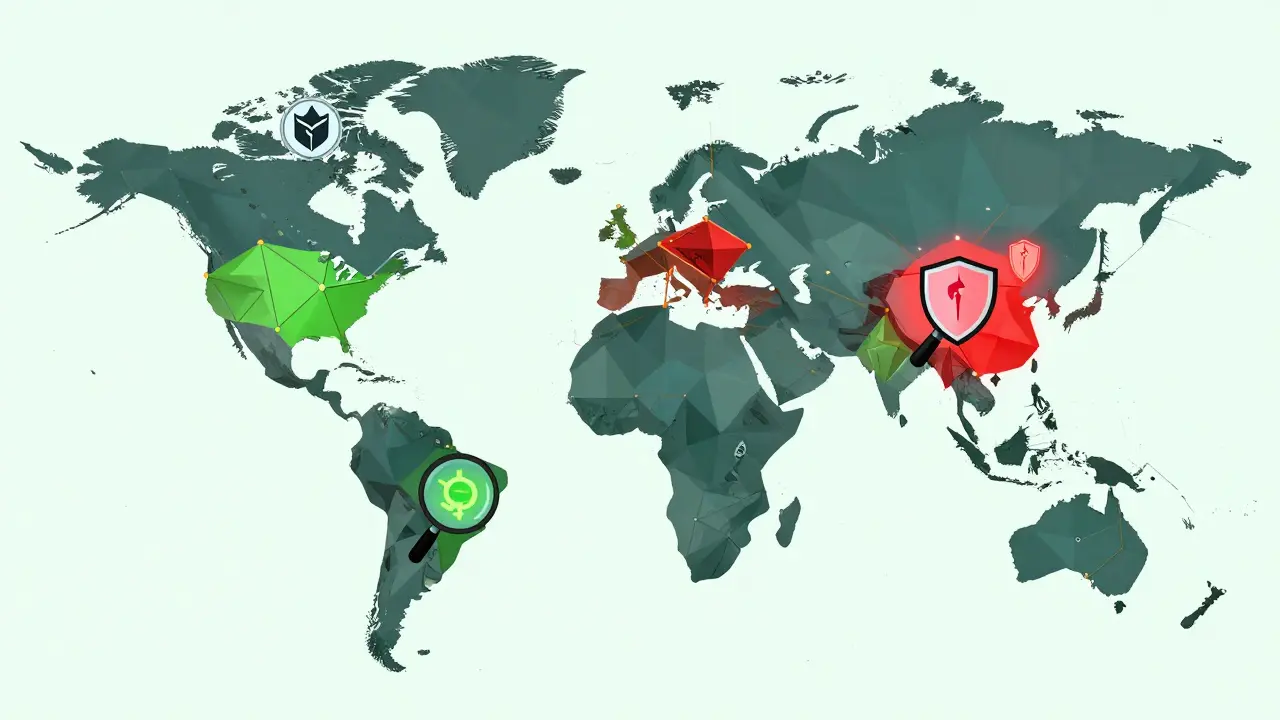
Most countries have crypto rules on paper - but not in practice
The Financial Action Task Force (FATF) says 91% of countries have AML/CFT rules for crypto. 84% say they’ve implemented the Travel Rule - which requires exchanges to share sender and receiver info on transfers over $1,000. Sounds good, right?
PwC’s 2025 report says otherwise. 75% of countries are still only partially compliant. Nearly 30% haven’t enforced the Travel Rule at all. That’s a massive gap. Why? Because enforcing crypto rules requires tech, training, and legal clarity - things most governments don’t have.
The U.S., UK, Singapore, and Japan are leading. They have dedicated crypto units inside their financial crime agencies. They work with Chainalysis and TRM Labs. They freeze wallets. They prosecute. But in places like Nigeria, Argentina, or Indonesia? Enforcement is patchy. Exchanges operate in the gray. Criminals move funds across borders faster than regulators can react.
Crypto fines are tiny compared to traditional finance
Between 2020 and early 2025, the entire crypto industry paid $13.5 billion in fines, sanctions, and losses from hacks. That sounds huge - until you compare it to traditional finance.
Bank of America and JPMorgan Chase alone have paid over $97 billion in penalties since 2008. The whole financial sector? Over $300 billion. For mortgage fraud. For laundering money for dictators. For rigging interest rates.
Crypto enforcement isn’t about big fines. It’s about building systems. Regulators aren’t trying to bankrupt exchanges. They’re trying to make them compliant. That’s why 72% of crypto enforcement actions are about licensing, reporting, and KYC failures - not theft or fraud. The goal isn’t punishment. It’s standardization.

2025’s biggest threats aren’t scams - they’re DeFi, NFTs, and stablecoins
Simple scams are fading. But new risks are rising. PwC’s 2025 forecast says 68% of regulators will release specific rules for DeFi protocols, NFT marketplaces, and stablecoins by the end of the year.
Why? Because that’s where the money is moving now. DeFi platforms let users lend, borrow, and trade without intermediaries - which makes tracking transactions nearly impossible. NFTs are being used to launder money through fake sales. Stablecoins like USDT and USDC are the backbone of crypto crime - and they’re still mostly unregulated outside the U.S. and EU.
And here’s the kicker: Kroll’s 2025 report found that $1.93 billion was stolen in the first half of 2025 alone. Most of it? Hacks of DeFi protocols. Not phishing. Not fake apps. Real code exploits. Criminals are getting smarter. They’re not trying to trick you anymore. They’re breaking the system.
Global cooperation is the only way forward
The T3 FCU proved something: when regulators, exchanges, and tech firms work together, they can stop crime fast. That model is spreading. Norton Rose Fulbright predicts 2025 will be the year of cross-border asset recovery. Imagine this: a hacker steals $10 million in crypto from a U.S. user. The funds go to a wallet in Singapore, then to a DeFi pool in South Korea, then to a mixer in Russia. In 2023, that money was gone forever. In 2025? Law enforcement from all four countries might freeze it in a single coordinated action.
The number of crypto users is exploding - from 560 million in 2024 to nearly 950 million by the end of 2025. More users mean more targets. But they also mean more eyes. More reports. More data. The tools to track crime exist. The question is: will governments use them?
What you need to know if you use crypto
If you’re holding crypto in 2025, here’s what matters:
- Use exchanges that follow KYC and the Travel Rule. They’re safer.
- Avoid platforms that don’t freeze suspicious wallets. They’re riskier.
- Don’t assume “private” wallets are safe. If you’re holding large amounts, use hardware wallets and never share your seed phrase.
- Report scams immediately. The more people report, the faster regulators act.
- Understand that stablecoins aren’t cash. They’re digital assets - and they’re now under heavy scrutiny.
The era of crypto being a lawless frontier is ending. The tools to catch criminals are here. The question isn’t whether enforcement will grow - it’s whether you’re ready for it.
Why do crypto crime reports conflict so much?
Different reports count different things. TRM Labs tracks only fraud like scams and phishing, which dropped in 2024. Chainalysis includes all illicit activity - ransomware, darknet sales, laundering - and their numbers grow as they uncover more hidden addresses. One isn’t wrong; they’re just measuring different parts of the problem.
Is crypto more dangerous than traditional banking?
No. Traditional finance has faced over $300 billion in fines for systemic fraud, money laundering, and market manipulation. Crypto’s total penalties since 2020? $13.5 billion. Crypto crime is more visible and easier to trace now, but traditional finance still handles vastly more money - and more crime - with far less oversight.
Why is TRON still a hotspot for crypto crime?
TRON still hosts 58% of illicit crypto volume because it’s cheap, fast, and widely used for USDT transfers. While the T3 FCU cut its crime rate by half, criminals are still exploiting its infrastructure. The drop was real - but not complete. TRON remains the most attractive chain for bad actors simply because it’s the most used for stablecoin transfers.
What’s the Travel Rule, and why does it matter?
The Travel Rule requires crypto exchanges to share sender and receiver information for transfers over $1,000. It’s the crypto equivalent of bank wire reporting. Without it, criminals can move money across borders anonymously. Only 70% of countries enforce it fully - and that’s why cross-border crypto crime remains a major challenge.
Are stablecoins being targeted by regulators?
Yes. Stablecoins like USDT and USDC are now the #1 tool for crypto crime because they’re tied to real money. Regulators in the U.S., EU, and UK are preparing new rules for 2025 that will require stablecoin issuers to hold reserves, report transactions, and freeze funds linked to sanctions. If you hold USDT, you’re now under more scrutiny than ever.
What should I do if I’m hacked or scammed?
Report it immediately. Use platforms like Chainalysis or TRM Labs’ reporting tools to flag the wallet address. Contact your exchange - many now have direct lines to law enforcement. The faster you report, the higher the chance authorities can freeze the funds. In 2024, over $130 million was recovered because victims acted fast.
Is crypto regulation getting stricter everywhere?
Not everywhere. The U.S., UK, Singapore, and EU are tightening rules fast. But in many emerging markets, enforcement is weak or non-existent. Crypto isn’t regulated globally - it’s regulated patchwork. That’s why criminals still move funds between jurisdictions with lax rules. The global fight against crypto crime depends on cooperation - and that’s still in progress.
Sarah Roberge
December 4, 2025 AT 20:24Shari Heglin
December 5, 2025 AT 13:40Mani Kumar
December 5, 2025 AT 17:35Tatiana Rodriguez
December 7, 2025 AT 12:58Britney Power
December 8, 2025 AT 15:16ashi chopra
December 9, 2025 AT 22:43Darlene Johnson
December 11, 2025 AT 19:27Sharmishtha Sohoni
December 12, 2025 AT 00:25Althea Gwen
December 12, 2025 AT 06:25Durgesh Mehta
December 13, 2025 AT 07:09